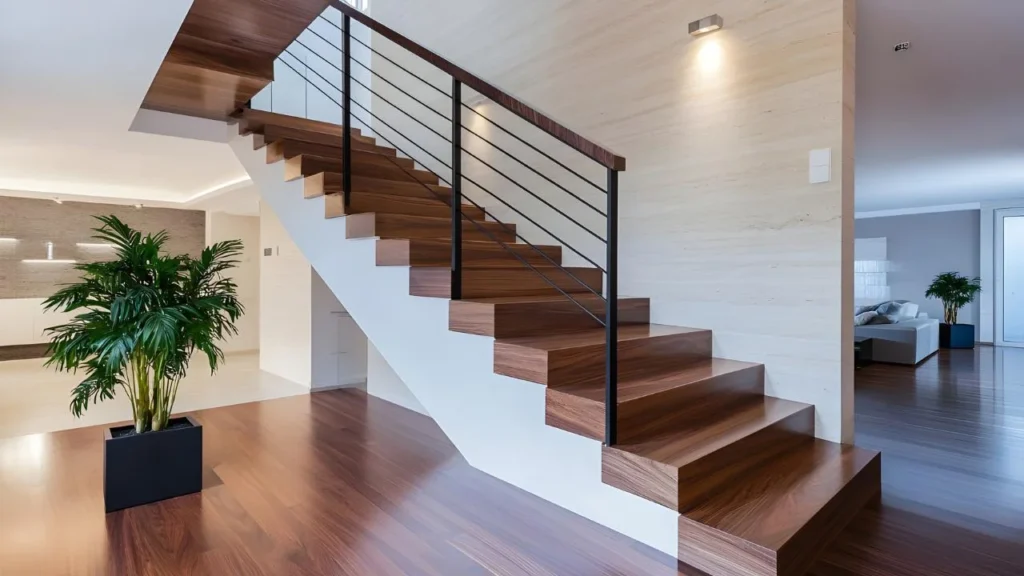
In 2026, staircase design goes beyond functionality, shaping the feel and flow of a home. Across Australia, architects and homeowners treat stairs as key architectural features that combine structure, safety, and style. Designs now prioritise open risers, mixed materials like steel and glass, and integrated lighting to enhance both aesthetics and usability. This overview is based on extensive research, including guidance from the National Construction Code, industry standards, and insights from Australian architects and staircase fabrication specialists.
What Is Staircase Design?
In simple terms, staircase design is the planning of structure, materials, safety, and visual impact of a stair system. In 2026, it also includes sustainability, smart lighting, and compliance with updated building standards.
Modern projects often combine engineering precision with architectural intent. An architectural staircase design now considers load calculations, balustrade spacing, tread depth, and slip resistance alongside visual goals. The updated 2026 National Construction Code reinforces performance-based design, especially for residential builds.
Australian Building Codes Board (ABCB) confirms that stair geometry, handrail height, and balustrade safety remain tightly regulated. Designers must balance creativity with compliance.
In 2026, the best staircase design integrates:
- Structural integrity
- Safe circulation
- Material durability
- Energy-efficient lighting
- Seamless interior integration
The result is a staircase that works as infrastructure and art.
Why Staircase Design Matters in Modern Homes
A staircase is often the first vertical element the eye follows. It sets tone and flow. In open-plan homes, it becomes a central visual anchor. While a staircase alone does not guarantee higher value, a distinctive design contributes to overall appeal.
Functionally, stairs affect:
- Traffic flow
- Natural light penetration
- Acoustic performance
- Space efficiency
A poorly positioned stair can disrupt movement. A well-designed open staircase design can visually expand space. According to guidance from WorkSafe Australia, compliant stair construction improves safety outcomes in residential settings. This includes consistent riser heights and appropriate handrails.
From a renovation perspective, many homeowners now replace bulky timber stairs with a modern steel staircase or glass staircase design to open interiors. The staircase also reflects personal identity. Whether you prefer minimalist staircase design, industrial staircase design, or bold sculptural forms, the structure tells a story about how you live.
Key Staircase Design Trends for 2026
Minimalist Staircase Designs
The clean-line aesthetic remains dominant. A minimalist staircase design reduces visual clutter and emphasises proportion. Slim treads, concealed fixings, and thin balustrades define the look.
Many Australian homes now feature modern staircase ideas that remove heavy stringers and decorative elements. Neutral palettes dominate. Matte black steel and pale timber are common pairings. This trend aligns with smaller urban footprints. Simpler forms maximise visual openness without sacrificing structural strength.
Floating and Open-Rise Staircases
The floating steel staircase continues to gain popularity. Treads appear suspended, often anchored into reinforced walls. An open staircase design allows light to travel through risers. This suits narrow terraces and duplex builds. According to engineering guidance from Engineers Australia, cantilevered and floating systems require precise load calculations and certified structural design. Improper anchoring risks long-term deflection. In 2026, safety glazing and hidden steel brackets make these designs safer than earlier versions.
Mixed-Material Staircases (Steel, Timber, Glass)
Blending materials creates texture and contrast. A glass and steel staircase softens industrial lines. Timber treads warm a metal staircase design. Many designers now specify a steel staircase with glass railing for contemporary homes. The transparency enhances natural light.
When selecting stairs design, consider combinations such as powder-coated steel with hardwood treads or laminated safety glass panels. This layered approach reflects broader interior trends that favour tactile surfaces, balanced contrast, and a cohesive architectural look.
Sculptural and Statement Staircases
The statement staircase design has moved beyond luxury mansions. Curved steel spines and dramatic voids now appear in suburban builds. A custom staircase design allows precise tailoring to ceiling height and spatial layout. Sculptural stairs often double as art installations. Industry commentary from the Australian Institute of Architects highlights increased experimentation with expressive forms in residential architecture.
Smart Stairs and Integrated Lighting
Smart lighting is no longer optional in premium builds. Motion-activated LED strips improve safety and energy efficiency. According to the Energy Council, LED technology significantly reduces household electricity use compared to traditional lighting.
Smart integration now includes:
- App-controlled stair lighting
- Automated night sensors
- Low-voltage systems
- Integration with home automation platforms
These systems enhance safety without increasing energy bills.
Popular Staircase Types Used in Australian Homes
Straight Staircases
The straight stair remains the most practical layout. It suits compact homes and is cost-efficient. Builders often favour straight steel staircases or metal staircases for predictable installation. Engineering is simpler, reducing fabrication costs.
L-Shaped and U-Shaped Staircases
These designs incorporate landings. They improve safety and reduce fall distance. An L-shaped layout works well in corner placements. U-shaped stairs maximise vertical rise within tight footprints. Many residential steel staircase systems use these configurations for duplex and townhouse builds.
Spiral Staircases
Spiral stairs save space. They are common in secondary areas or loft access. However, the National Construction Code imposes dimensional requirements. Always confirm compliance before installation. A modern industrial staircase in spiral form often uses steel treads with perforated finishes.
Cantilevered Staircases
Cantilevered stairs create a floating effect. Each tread anchors directly into the wall. A custom metal staircase design often supports this style. Structural engineers must assess load transfer carefully. This option suits high-end architectural builds.
Outdoor Staircase Designs
An outdoor steel staircase must withstand corrosion and extreme weather conditions, particularly in coastal areas. Protective coatings enhance durability and longevity. Hot-dip galvanised stairs provide long-term resistance to rust, making them ideal for Australian climates. In commercial or industrial settings, robust steel stairs designed to meet safety and load standards ensure both durability and compliance.
Best Materials for Staircase Design in 2026
Steel Staircases
A steel staircase design offers strength, slim profiles, and durability. Steel suits both indoor and outdoor applications. High-quality fabrication is critical to long-term performance. Understanding key stair components such as stringers, balustrades, treads, fixings, and connection details helps ensure structural integrity, safety compliance, and a refined architectural finish.
Steel allows:
- Modern steel stairs for homes
- Industrial steel staircase design
- Prefabricated steel staircase systems
Its recyclability also supports sustainable builds.
Timber Staircases (Tasmanian Oak & Sustainable Hardwoods)
Tasmanian Oak remains popular. Sustainable sourcing aligns with environmental targets. The Forest Stewardship Council Australia promotes certified timber supply chains. Timber softens steel structures and suits mixed-material builds.
Glass Balustrades and Panels
A glass staircase design increases natural light. Laminated safety glass ensures compliance. According to Standards Australia, glazing used in balustrades must meet impact resistance standards.
Concrete Staircases
Concrete delivers mass and acoustic stability. It works well in minimalist homes. Polished finishes align with modern industrial interiors.
Sustainable and Recycled Materials
Circular design principles now influence material choice. The Green Building Council of Australia encourages lifecycle assessment in residential construction. Recycled steel and reclaimed timber reduce embodied carbon.
Staircase Design for Different Spaces
Staircase Design for Small Homes
Compact homes require efficient geometry. Straight or L-shaped layouts save floor space. A slim metal staircase with open risers prevents visual bulk. Light colours help maintain brightness.
Staircases for Open-Plan Living Areas
Open-plan homes benefit from feature stairs. A contemporary staircase design can define zones without walls. A glass and steel staircase maintains visual continuity. It acts like a transparent divider.
Staircase Design for Multi-Storey Homes
Multi-storey homes require careful structural integration. A custom steel staircase adapts to ceiling heights and slab thickness. Designers must coordinate with engineers early. Load-bearing walls and slab penetrations require precise planning.
How to Choose the Right Staircase Design
Assessing Available Space
Measure floor area and ceiling height carefully. Check head clearance requirements under NCC guidelines.
Matching Staircase Design With Interior Style
A modern staircase design pairs well with neutral interiors. A modern industrial staircase suits exposed brick and concrete. Choose consistency in finishes.
Selecting the Right Materials (Visual Contrast & Tactile Finishes)
Balance contrast and texture. A steel staircase with glass railing feels light and contemporary. Timber treads introduce warmth.
Considering Safety and Building Codes
The NCC specifies:
- Maximum riser heights
- Minimum tread depth
- Handrail height
- Balustrade spacing
Consult the Australian Building Codes Board for current 2026 updates. Professional certification ensures compliance.
Balancing Design and Budget
Costs vary by:
- Material
- Engineering complexity
- Labour
- Finishes
Straight prefabricated systems reduce expenses. Complex sculptural forms increase engineering fees.
Staircase Safety and Compliance in Australia
The 2026 National Construction Code maintains strict stair requirements. These include uniform riser height, slip-resistant surfaces, and compliant balustrades. Australian Building Codes Board outline dimensional rules and safety benchmarks.
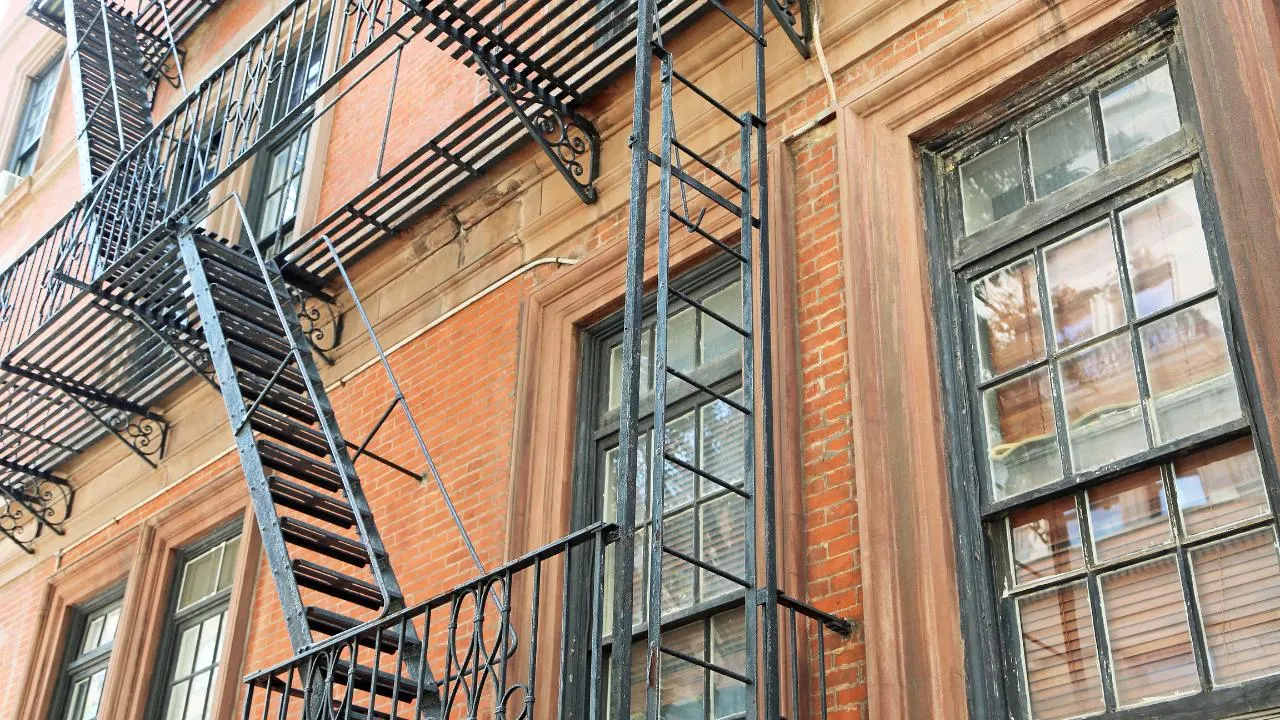
For commercial properties, fire escape stairs must comply with emergency egress requirements. This includes appropriate width, load capacity, fire resistance levels, and unobstructed exit pathways to ensure safe evacuation during emergencies. Proper certification and professional engineering approval are essential to confirm full compliance.
According to Safe Work Australia, fall prevention remains a key construction safety priority.
When evaluating stairs, confirm:
- Certification by licensed professionals
- Proper structural engineering documentation
- Non-slip finishes
- Adequate lighting
If unsure, consult a registered builder or structural engineer. Compliance protects occupants and reduces liability.
Custom vs Prefabricated Staircase Designs
Choosing the right staircase type can impact both style and cost. Custom staircases offer flexibility and unique designs, while prefabricated steel stairs provide faster installation and predictable pricing. Here’s a quick comparison:
| Aspect | Custom Staircase | Prefabricated Staircase |
| Definition | Tailored to space and design | Factory-made steel stairs |
| Benefits | Unique geometry, premium finishes, seamless integration | Predictable cost, quick installation, modern aesthetic options |
| Cost | Higher due to design and fabrication | Lower; saves on labour and engineering |
| Best Use | High-end homes or complex layouts | Budget projects or standard layouts |
| Material Flexibility | Steel, timber, and glass combinations | Limited but improving |
Cost Considerations for Staircase Design
Material prices fluctuate due to supply chain pressures. Steel costs depend on global demand and fabrication complexity. Labour remains a significant portion of the budget, especially for custom builds. Engineering certification adds fees but ensures compliance. Simpler industrial staircase systems cost less than sculptural feature stairs.
Always factor in:
- Design consultation
- Fabrication
- Installation
- Finishes
- Compliance certification
Transparent quotes reduce unexpected costs.
Future Innovations in Staircase Design (2026 and Beyond)
Emerging technologies include 3D-printed steel nodes and modular components. The Green Building Council of Australia highlights embodied carbon reduction as a 2026 priority. Carbon-neutral buildings increasingly influence material selection. Digital modelling improves fabrication accuracy.
Future staircases may integrate:
- Energy-harvesting treads
- Advanced sensor lighting
- Modular reconfiguration
Innovation focuses on safety, sustainability, and efficiency.
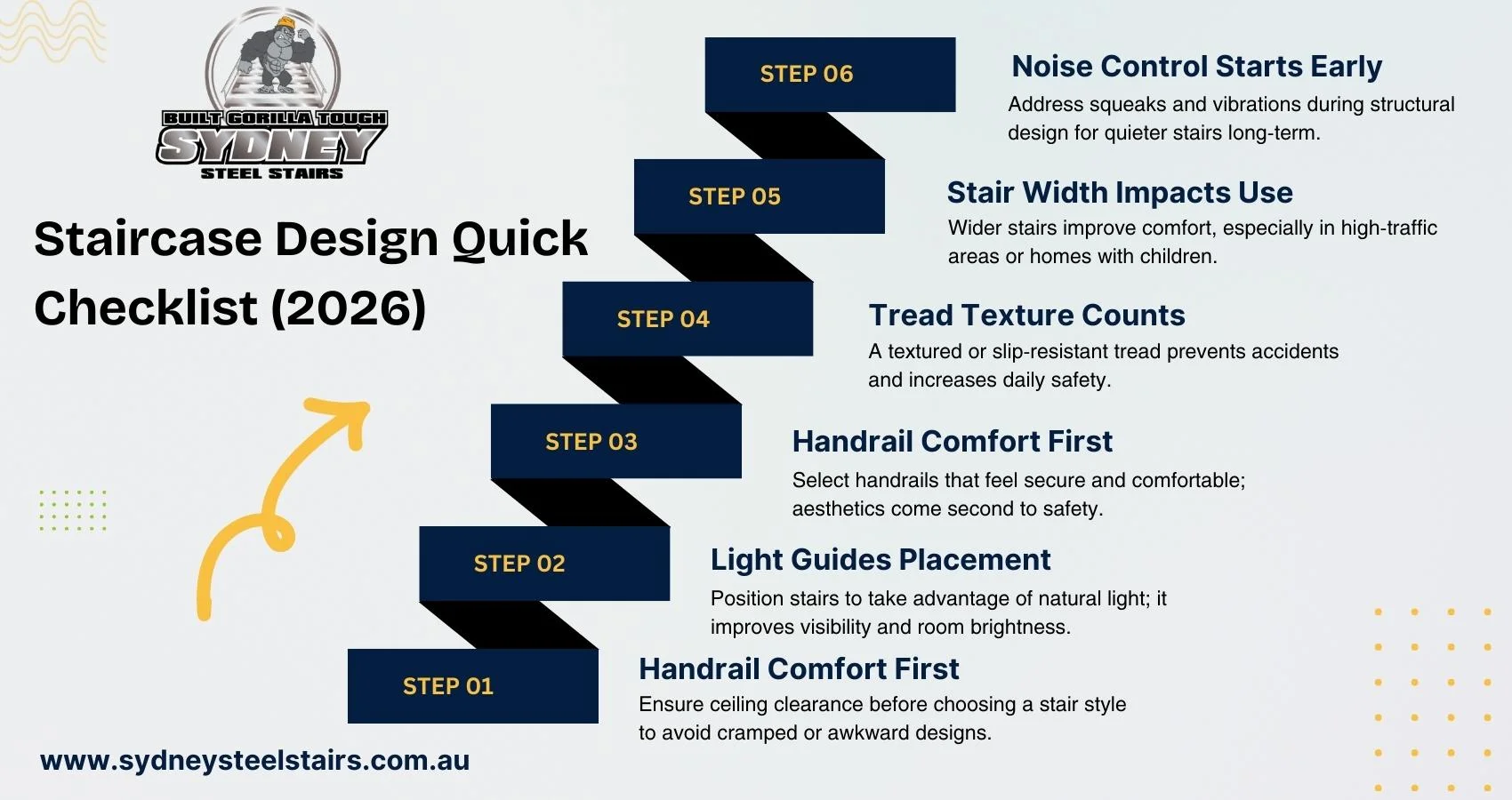
Staircase Design Quick Checklist (2026)
Conclusion
At Sydney Steel Stairs, we design and fabricate high-performance steel staircases that combine structural strength with refined architectural detail. Whether you’re planning a feature staircase for a new build or upgrading an existing structure, our team delivers engineered solutions that meet Australian standards and elevate your space. From modern steel stairs for homes to compliant commercial systems, every project is built with precision, durability, and long-term performance in mind.
If you’re ready to create a staircase that balances safety, sustainability, and striking design, Get in touch with Sydney Steel Stairs today and start your project with confidence.
FAQs
What is the most popular staircase design in 2026?
Floating and minimalist staircases remain the top choices for modern Australian homes. They maximise light, open space, and visual appeal in new residential builds.
Which staircase material lasts the longest?
Structural steel with proper coatings offers the highest durability. It withstands varied Australian climates and requires minimal maintenance compared to timber or glass alone.
Are floating staircases safe for homes?
Yes. When professionally engineered and built to NCC structural standards, floating staircases are fully safe and stable for residential use.
What staircase design works best for small houses?
Straight or L-shaped staircases optimise floor space while maintaining compliance with building regulations. They provide practical functionality in compact layouts.
Can staircases increase property value?
Architectural and well-designed staircases can enhance buyer perception and add aesthetic value, contributing positively to a home’s market appeal.