Choosing the right staircase material is an important decision in commercial and industrial construction. For architects, builders, and project managers in Australia, the debate often comes down to concrete vs steel stairs. Both materials are widely used in commercial buildings, infrastructure projects, and industrial facilities, but each offers different benefits in terms of durability, cost, design flexibility, and installation speed.
In recent years, many projects have shifted toward prefabricated concrete stairs and modular steel systems due to faster installation and improved structural efficiency. However, Australian building regulations, safety standards, and project requirements still play a major role in material selection.
What Are Concrete Stairs?
Concrete staircases are constructed using reinforced concrete and are typically either cast in place on site or manufactured as prefabricated concrete stairs before being transported to the construction site.
These stair systems are widely used in:
- Commercial office buildings
- Multi-storey residential complexes
- Public infrastructure projects
- Outdoor concrete stairs in landscapes and public spaces
Concrete staircases are valued for their structural stability, high compressive strength, and long lifespan. When designed properly, they can withstand heavy loads and continuous use in high-traffic environments.
In Australia, concrete staircase Australia designs are often integrated into the structural frame of a building, providing additional rigidity and stability. This makes them particularly suitable for multi-storey developments and public buildings where durability is a priority.
What Are Steel Stairs?
Steel staircases are fabricated using structural steel components that are assembled on site. They are commonly used in industrial facilities, commercial buildings, and modern architectural designs.
Typical steel stair applications include:
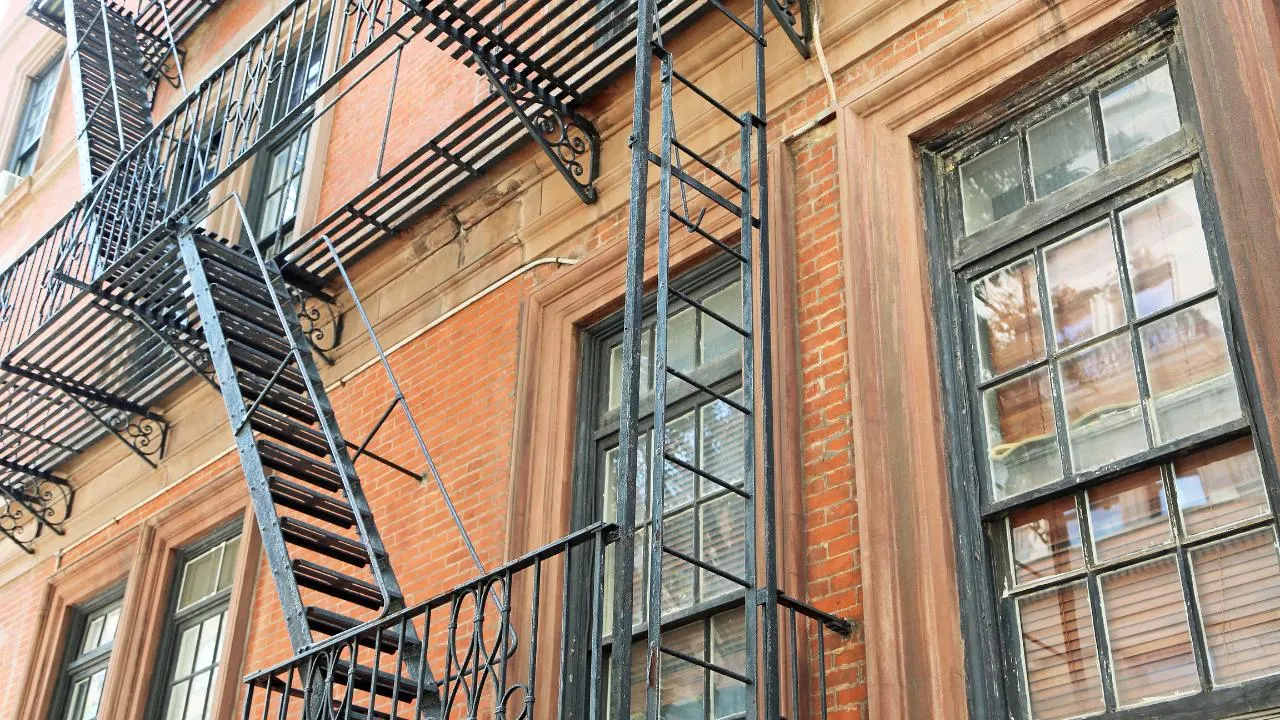
- Steel fire escape stairs
- Industrial staircase systems in warehouses
- Commercial stairs for offices and public buildings
- Stainless steel stairs used in corrosive or hygienic environments
Steel staircases are valued for their high strength-to-weight ratio, modular fabrication, and design flexibility. Fabricators can produce complex forms such as spiral stairs, floating stairs, and contemporary architectural designs.
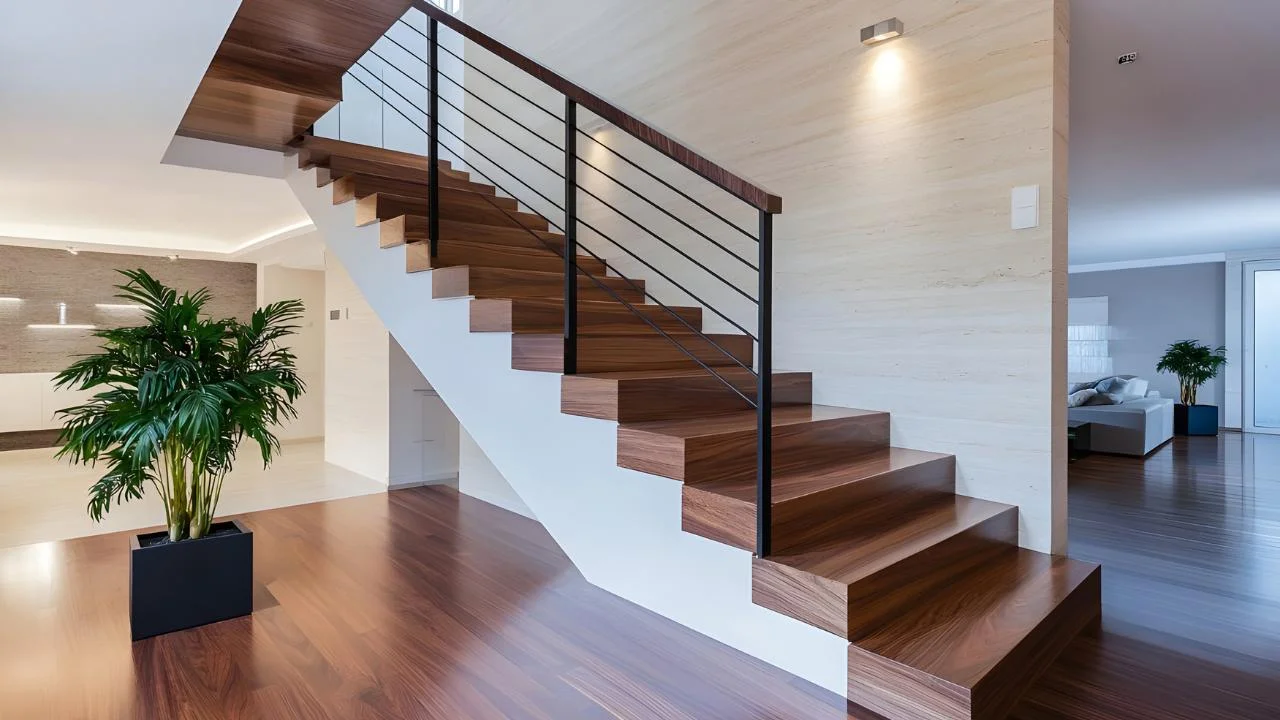
Steel also supports contemporary modern staircase design trends, particularly in commercial interiors and architectural projects where aesthetics and structural efficiency are important.
Concrete vs Steel Stairs: Key Differences
| Feature | Concrete Stairs | Steel Stairs |
| Durability | Extremely durable | High durability with coatings |
| Installation | Slower, site-built | Faster prefabrication |
| Design flexibility | Limited | Highly flexible |
| Weight | Very heavy | Lightweight |
| Maintenance | Low | Requires corrosion protection |
| Ideal for | Infrastructure, heavy buildings | Industrial and commercial projects |
For architects comparing concrete vs steel stairs, the choice often depends on building type, design goals, and installation constraints. Concrete excels in structural mass and longevity, while steel offers flexibility and speed of construction.
Benefits of Steel Staircases in Commercial and Industrial Buildings
Steel stair systems have become increasingly common across Australian commercial and industrial projects.
High strength-to-weight ratio
Steel provides exceptional structural capacity relative to its weight. This allows designers to create efficient stair systems with minimal structural bulk.
Faster installation and modular construction
Prefabricated steel components can be manufactured offsite and installed quickly, which reduces project timelines and labour requirements.
Flexibility for architectural design
Steel supports a wide range of modern staircase design options, including floating stairs, spiral stairs, and open architectural staircases.
Ideal for fire escape and external stair systems
Steel is frequently used for fire escape stairs because of its strength, durability, and ability to support rapid installation in emergency access systems.
These advantages make steel staircase Australia systems a common choice for warehouses, commercial offices, and industrial developments.
Structural Strength and Load Capacity
When comparing concrete vs steel stairs, structural strength and load capacity are critical considerations for commercial and industrial buildings.
Concrete Stairs
- Reinforced concrete offers high compressive strength for heavy structural loads.
- Common in concrete staircase Australia designs for multi-storey buildings and infrastructure.
- Provides strong structural stability and rigidity.
- Suitable for high-traffic environments and large commercial buildings.
Steel Stairs
- Structural steel provides excellent tensile strength and load efficiency.
- High strength-to-weight ratio allows lighter but strong stair structures.
- Frequently used in industrial staircase systems and steel staircase Australia projects.
- Ideal for warehouses, factories, and commercial buildings.
In practice, engineers choose between concrete vs steel stairs based on load requirements, building design, and structural integration.
Advantages of Concrete Staircases in Large-Scale Developments
Despite the popularity of steel systems, concrete staircase Australia solutions remain essential for many large developments.
Superior stability and durability
Concrete stairs provide exceptional structural mass and stability, particularly in multi-storey buildings.
Excellent fire resistance
Concrete naturally resists fire and does not lose structural strength as quickly as exposed steel.
Low maintenance requirements
Concrete staircases generally require minimal maintenance once installed.
Ideal for high-traffic buildings
Because of their durability, concrete stairs are often used in:
- Shopping centres
- Transport infrastructure
- Schools and hospitals
- Public buildings
These benefits make prefabricated concrete stairs and cast-in-place designs popular in infrastructure and public construction projects.
Cost Considerations for Australian Projects
Cost comparisons between concrete vs steel stairs depend on several variables, including materials, labour, transportation, and installation time.
Key cost factors include:
- Raw material prices
- Fabrication and manufacturing costs
- Transportation logistics
- On-site labour requirements
- Maintenance and lifecycle costs
Concrete typically has lower raw material costs. However, the installation process can be labour-intensive, particularly for cast-in-place staircases.
Steel staircases often involve higher fabrication costs due to manufacturing and finishing processes. However, faster installation can reduce labour expenses and project delays.
Infrastructure Australia shows that labour costs and project delays significantly affect construction budgets across major infrastructure projects.
For many commercial developers, the faster installation time of steel staircase Australia systems helps offset the higher upfront cost.
Durability and Maintenance Requirements
Durability is another important consideration when evaluating concrete vs steel stairs.
Concrete stair longevity
Concrete staircases perform well in harsh weather conditions and are often used for outdoor concrete stairs. Reinforced concrete structures can last several decades when properly designed and maintained.
However, concrete can develop cracks over time due to thermal movement, moisture exposure, or structural settlement.
Steel stair maintenance
Steel stairs require protective coatings to prevent corrosion, especially in coastal or high-humidity environments. According to the Australian Steel Institute, corrosion protection is a critical design factor when structural steel is used in exposed environments.
Common corrosion protection methods include:
- Galvanization
- Protective paint coatings
- Stainless steel fabrication
Using stainless steel stairs can significantly reduce the risk of corrosion in certain industrial or coastal environments.
Modern Staircase Design Trends in Australia
Architectural trends have significantly influenced modern staircase design in recent years.
Minimalist steel staircases
Architects increasingly use steel to create minimalist, open staircases that enhance visual space.
Industrial-style staircase designs
Industrial interiors often feature exposed steel staircases that complement warehouse or factory aesthetics.
Integration with glass and metal
Many contemporary staircases combine steel with glass balustrades, aluminium elements, or concrete finishes.
Functional commercial design
In commercial buildings, staircases are designed to balance aesthetics, durability, and safety.
These trends highlight the growing popularity of steel staircase Australia systems in modern architecture.
Outdoor Stair Solutions for Commercial and Industrial Sites
Outdoor stair systems must withstand weather exposure, heavy use, and safety requirements.
Common outdoor solutions include:
Weather-resistant steel stairs
Galvanised steel stair systems provide durability and corrosion resistance in exposed environments.
Durable outdoor concrete stairs
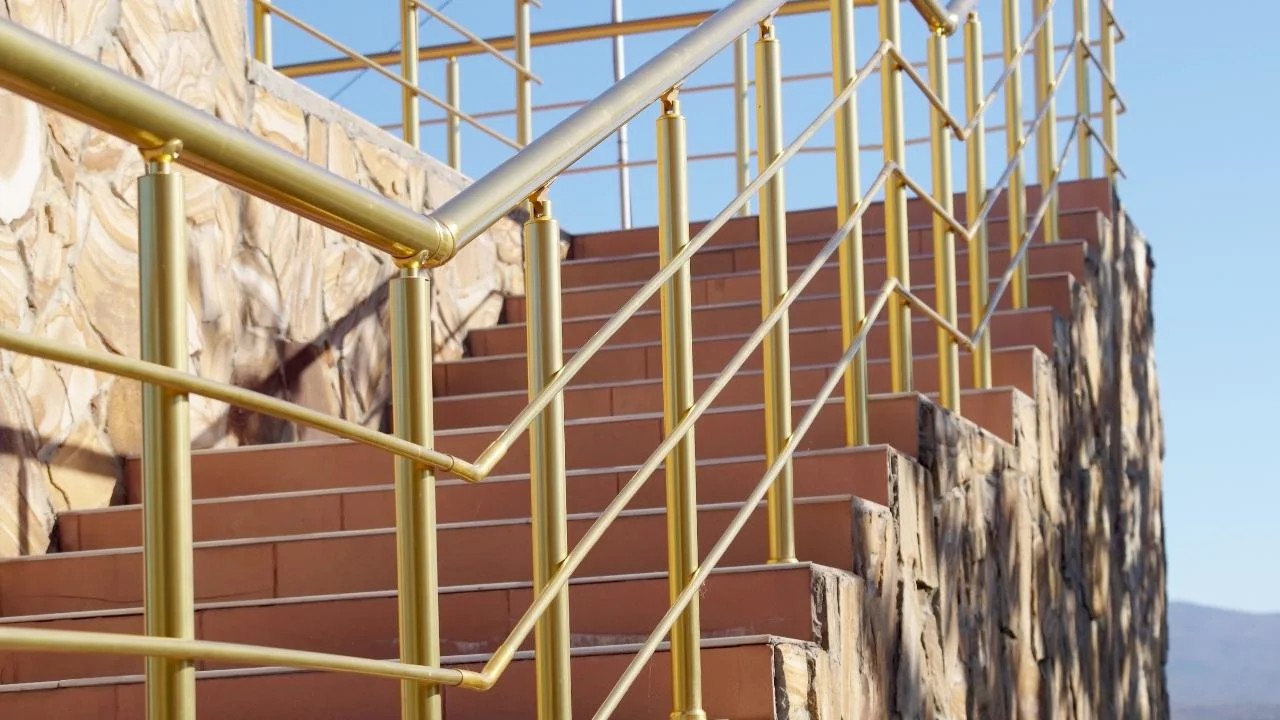
Outdoor concrete stairs are widely used in infrastructure and landscaping projects due to their durability.
Slip-resistant surfaces
Safety features such as textured surfaces and anti-slip coatings help prevent accidents.
Long-term performance
Both materials can perform well outdoors when designed properly, although environmental conditions often influence the final material selection.
Prefabricated Concrete vs Modular Steel Stair Systems
Prefabricated construction is becoming increasingly common in Australian building projects.
Both prefabricated concrete stairs and modular steel stair systems offer advantages such as:
- Faster installation
- Reduced labour requirements
- Improved quality control
- Consistent manufacturing standards
For developers seeking efficiency and predictable timelines, prefabricated stair systems can provide substantial benefits.
Stair Compliance Requirements in Australia (NCC and Safety Standards)
Stair construction in Australia must comply with strict safety regulations. Understanding stair safety and compliance requirements is essential for any commercial or industrial project.
Key requirements under the National Construction Code (NCC) include:
- Minimum tread depth
- Maximum riser height
- Handrail requirements
- Slip resistance standards
- Emergency egress accessibility
These rules apply to both steel staircase Australia and concrete staircase Australia systems. Commercial buildings must also meet workplace safety regulations and accessibility requirements to ensure safe access for building occupants.
Best Applications for Each Stair Type
Where Concrete Stairs Work Best
Concrete staircases are typically used in:
- Apartment buildings
- Public infrastructure
- Transport hubs
- Heavy-traffic public buildings
- Outdoor concrete stairs
Where Steel Stairs Work Best
Steel staircases are ideal for:
- Warehouses and logistics facilities
- Industrial plants
- Steel fire escape stairs
- Commercial interior staircases
- Industrial staircase systems
Installation Considerations for Steel and Concrete Stairs
Proper installation is critical to staircase performance and safety. Choosing the right stair components from the outset helps ensure structural integrity and long-term reliability.
Important considerations include:
On-site construction vs prefabrication
Concrete stairs are often built on site, while steel stairs are frequently prefabricated.
Structural integration
Staircases must integrate with the building’s structural frame and load-bearing systems.
Site safety
Construction teams must follow safety protocols during stair installation.
Long-term inspection
Regular inspection ensures both steel and concrete stairs remain safe over time.
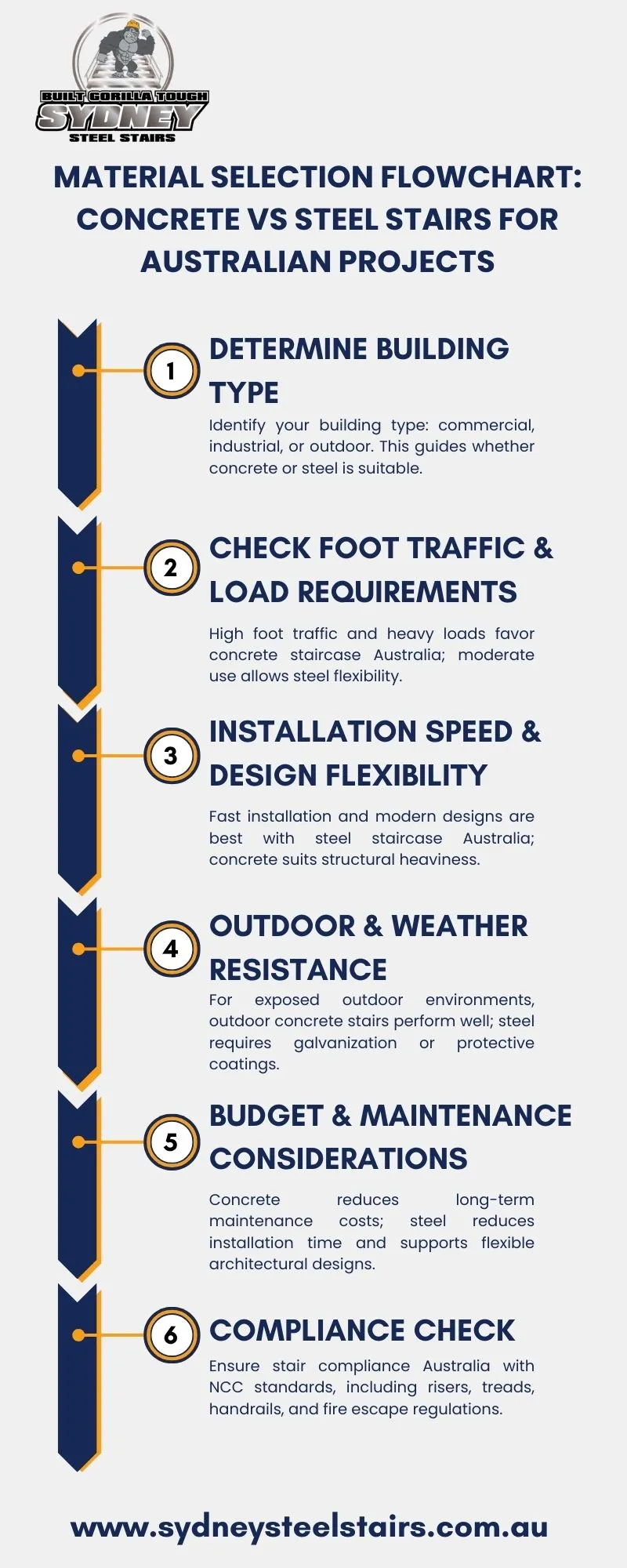
Material Selection Flowchart: Concrete vs Steel Stairs for Australian Projects
Conclusion
When comparing concrete vs steel stairs, the best option depends on the building type and project requirements. Concrete staircase Australia systems deliver durability, fire resistance, and long-term performance, making them ideal for public buildings, infrastructure, and outdoor stairs.
In contrast, steel staircase Australia solutions offer faster installation, lighter structural weight, and greater design flexibility. These advantages make them suitable for industrial staircase systems, commercial stairs, and steel fire escape stairs.
Ultimately, choosing between concrete vs steel stairs should be based on structural needs, budget, design goals, and compliance with stair compliance Australia standards.
FAQs
What is the best staircase material for commercial buildings?
Both concrete vs steel stairs are suitable depending on the project. Concrete staircase Australia systems provide durability and fire resistance, while builders prefer steel staircase Australia solutions for faster installation and flexible designs in commercial and industrial projects.
How do steel fire escape stairs meet Australian safety regulations?
Steel fire escape stairs comply with the National Construction Code (NCC) issued by the Australian Building Codes Board. The regulations cover structural strength, fire safety, handrails, and emergency access requirements.
Can prefabricated concrete stairs be used in large projects?
Yes. Manufacturers produce prefabricated concrete stairs off-site for commercial and infrastructure projects, reducing installation time while maintaining durability in concrete staircase Australia systems.
Which staircase material is most durable for outdoor environments?
Outdoor concrete stairs are naturally weather-resistant and require minimal maintenance. Steel stairs also perform well outdoors when protected with galvanization or corrosion-resistant coatings.
What makes stainless steel stairs suitable for industrial environments?
Stainless steel stairs are durable, corrosion-resistant, and ideal for industrial staircase applications in warehouses, factories, and commercial facilities exposed to moisture or chemicals.