Stairs are a common feature in homes, workplaces, and public spaces, yet they pose a significant risk of injury if not properly designed or maintained. Every year, thousands of Australians experience serious accidents from slips, trips, and falls on stairs, highlighting the need for effective stair safety measures.
Ensuring stairs comply with regulations, are equipped with proper handrails, and have non-slip surfaces can dramatically reduce these risks. Awareness, maintenance, and the right safety products are key to protecting all users, from children to older adults. This article guides you through essential stair safety tips, standards, and solutions to keep everyone safe.
Why Stair Safety Matters in Australia
Falls are a leading cause of serious injury and death across Australia. Data from the Australian Institute of Health and Welfare (AIHW) shows that in 2023‑24, falls were the number one cause of injury hospitalisations and the leading cause of injury‑related deaths nationally. Hospitalisations from falls numbered nearly 248,000 and accounted for 43% of all injury admissions. Falls deaths in 2022‑23 exceeded 6,600 people. People aged 85 years and over were at highest risk by a wide margin. These statistics include falls from the same level, slipping, and falls on steps or stairs.
Stair safety isn’t just about preventing trips. It involves meeting specific regulatory requirements under the National Construction Code (NCC) and relevant Australian stair regulations like AS 4586 (slip resistance) and AS 1428.1 (design for access and mobility) to minimise risk for occupants in homes, rented properties, workplaces, aged care facilities, and public spaces.
Stair Safety Risks and Common Causes
Most stair accidents are caused by a combination of environmental and human factors:
- Slip hazards: Wet or smooth surfaces reduce friction underfoot.
- Poor grip at nosings: Inadequate edge visibility or worn edges increase trip risk.
- Inconsistent dimensions: Uneven rise or going (tread depth) disrupts gait and balance.
- Inadequate lighting or handrails: These reduce visual cues and support, especially for older people.
- Human factors: Carrying loads, haste, or poor footwear can worsen risk profiles.
According to Safe Work Australia, slips, trips, and falls are among the most common workplace injury mechanisms, occurring in homes and workplaces alike.
Slips often occur when friction drops below critical thresholds (e.g., due to moisture or worn surfaces), and people fail to adjust their stride in time. While not specific to stairs, this reinforces the importance of slip‑resistant surfaces on stair treads and nosings.
Overview of Australian Stair Regulations and Standards
In Australia, stair safety is governed by the National Construction Code (NCC), also known as the Building Code of Australia (BCA), along with relevant Australian Standards. The NCC sets minimum performance requirements for structural safety, access, and slip resistance in both residential and commercial buildings. Requirements vary depending on building class and use, but key safety aspects apply to all stairs.
Slip Resistance (AS 4586)
Stair treads and nosings must meet specific slip-resistance classifications under AS 4586 to reduce the risk of slips. Typical ratings include P3/R10 for dry interior areas and P4/R11 for wet exterior surfaces. Slip-resistance is tested using methods such as the wet pendulum test, ensuring that stair surfaces provide adequate traction under normal conditions and maintain safety for all users.
Accessibility and Visibility (AS 1428.1)
AS 1428.1 focuses on accessible design, requiring that stair nosings contrast visually with the tread by at least 30%. This helps people with low vision detect step edges and navigate stairs safely. The standard also provides guidance on stair dimensions to support mobility and ensure safe, inclusive access for all users.
Riser and Going Uniformity
All steps within a flight must have consistent rise and going dimensions. Maintaining uniform step height and depth helps prevent unexpected changes in footing, which can lead to trips and falls. Consistency in stair geometry increases user confidence and overall stair safety.
Landing Dimensions
Landings are required at changes in direction and at regular intervals along stair flights. They provide a safe space for users to rest or adjust their footing. Minimum landing lengths, such as 750 mm, are recommended to allow adequate transition between flights and reduce the risk of accidents.
Handrails and Barriers
Handrails and barriers are essential where there is a risk of falling. They must meet specific requirements for height, grip, and continuity to provide reliable support. Barriers also protect against falls from elevated platforms or edges, ensuring users are safe while navigating stairs.
Stairway Shape and Size
The number of risers per flight should be between 2 and 18, with geometry designed to make stairs predictable and easy to use. Proper stair proportions and flight size improve safety, prevent fatigue, and ensure users can ascend and descend with confidence, supporting NCC stair requirements.
Other Relevant Standards (AS 1657)
AS 1657 applies to fixed stairways, walkways, and associated barriers, providing additional guidance on structural safety. This standard works alongside slip-resistance and accessibility requirements to ensure stairs are safe, stable, and compliant in both commercial and residential settings.
Benefits of Non‑Slip Solutions and Product Types
Products that address stair safety serve multiple functions:
- Safety: Reduce the likelihood of slip events by increasing surface friction.
- Accessibility: Visual contrast on nosings helps people with low vision detect step edges.
- Durability: Quality non‑slip materials withstand heavy traffic and environmental exposure.
- Maintenance: Robust treads and nosings require less frequent replacement than improvised solutions like tape.
Common products include textured stair treads, non‑slip stair treads, and anti‑slip stair nosing strips designed to comply with AS 4586 and AS 1428.1.
Safety Stair Treads, Nosings, and Slip Resistance Options
Stair safety depends on the right combination of stair components like treads, nosings, handrails, and surface finishes. Using compliant components ensures every part of the stair supports safe movement and reduces slip risks.
Here’s an overview of popular slip‑resistant stair solutions in Australia:
1. Non‑Slip Stair Treads
These are rigid inserts or overlays applied directly to stair surfaces. They are tested to ensure they meet slip‑resistance classes and are suitable for interior or exterior use.
2. Anti‑Slip Stair Nosings
Anti‑slip nosings provide traction at the step edge and can include:
- Angular or flat metal strips with textured surfaces.
- High‑contrast edging to improve visibility and comply with accessibility standards.
Nosing strips typically must provide around 30% visual contrast to adjacent surfaces to aid visibility.
3. Surface Coatings
CSIRO‑certified coatings can transform existing stair surfaces into compliant, slip‑resistant finishes without wholesale replacement.
Stair Compliance in Practice: Installation and Maintenance
Meeting stair compliance in Australia in actual buildings involves:
Installation Best Practices
- Choose products tested to AS 4586 with documented slip‑resistance values.
- Ensure nosing strip width and contrast meet AS 1428.1 criteria.
- Install in accordance with manufacturer recommendations and NCC geometric design limits.
Maintenance and Inspections
Routine maintenance is key:
- Check for wear and tear on treads and nosings.
- Replace damaged or worn elements promptly.
- Test slip‑resistance after heavy cleaning or surface changes.
Non‑Compliance Penalties
Using untested or improvised solutions (e.g., generic tape or cheap adhesive strips not tested to AS 4586) can expose property owners to liability if an injury occurs. Always choose compliant products.
Residential Stair Regulations and Safety
For homes, residential stair regulations still apply to new builds and substantial renovations. Key points include:
- Consistent riser and going dimensions.
- Slip resistance for stairs likely to be wet (e.g., external steps).
- Adequate lighting and handrails where appropriate.
Landlords and managers should ensure stairs are safe, especially where tenants include older adults or children.
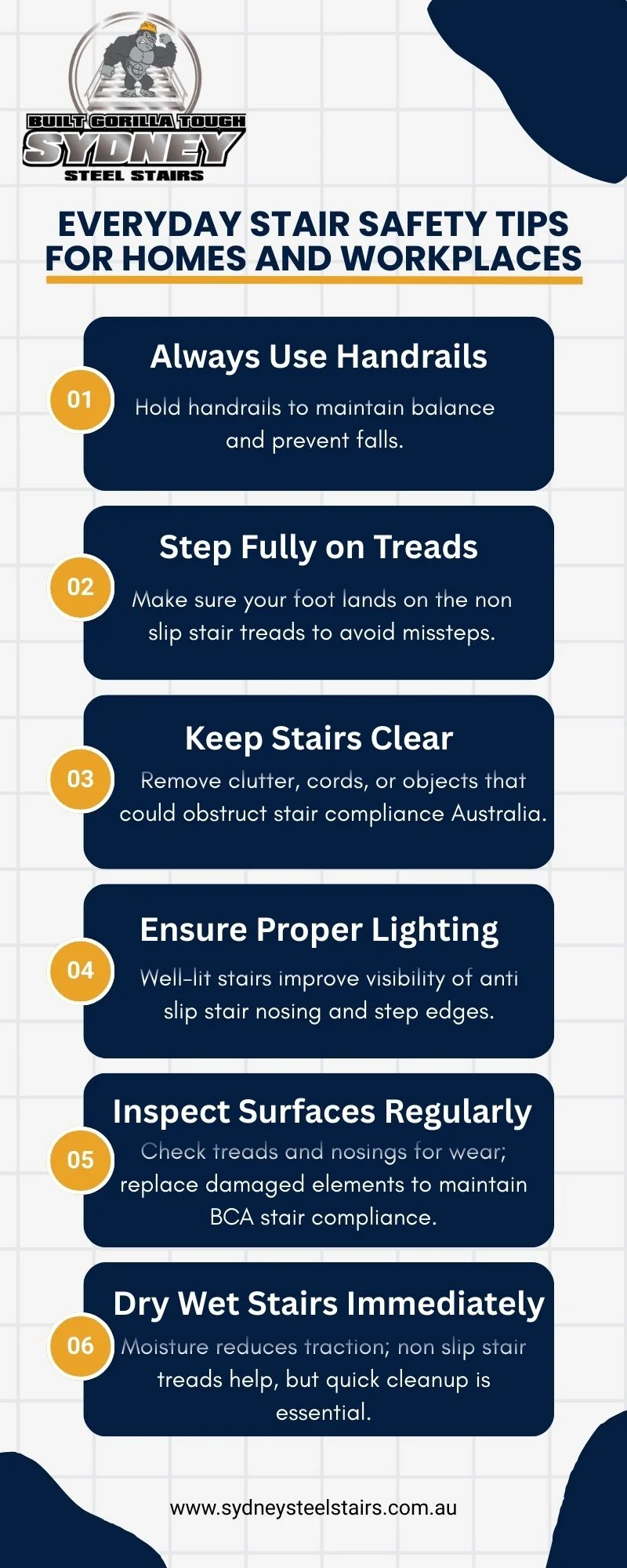
Everyday Stair Safety Tips for Homes and Workplaces
Commercial and Aged Care Stair Compliance
Commercial buildings and aged care facilities face stricter regulatory scrutiny:
- Workplace health and safety Laws require risk assessments and effective control measures.
- Aged Care Quality and Safety Commission standards emphasise safe environments for frail or mobility‑impaired residents.
Regular compliance audits and accurate documentation are essential for legal and ethical duty‑of‑care obligations.
When to Seek Professional Advice
You should consult a qualified:
- Building certifier for design verification and documentation.
- Architect or engineer for complex stair geometries or structural concerns.
- An occupational therapist or accessibility expert when adapting stairs for those with mobility challenges.
Professional involvement ensures BCA stair compliance with current NCC editions and relevant Australian Standards.
Conclusion
Stair safety in Australia is a mix of regulatory compliance and practical risk reduction. Understanding and applying the NCC’s slip‑resistance provisions alongside AS 4586 and AS 1428.1 helps reduce fall‑related injuries and liability.
Non‑slip stair treads and anti‑slip stair nosings are proven tools for improving safety. Regular inspection and maintenance keep these measures effective over time. Make stair safety a priority in homes, workplaces, and aged care settings.
Upgrade your stairs today with Sydney Steel Stairs. Their durable, non-slip treads and nosings ensure safer, compliant stairways for homes, workplaces, and aged care facilities. Protect everyone with a simple, reliable solution.
Related Article
Staircase Design 2026: Modern Ideas for Australian Homes
FAQs
Can I install non-slip treads on curved or spiral stairs?
Yes, flexible non-slip stair treads and custom anti-slip stair nosing can be fitted to curved or spiral stairs safely. Professional installation ensures compliance.
How often should I inspect my stairs for safety?
Stairs should be checked at least every 6–12 months. Inspect treads, nosings, handrails, and lighting to prevent slips, trips, or falls.
Are there eco-friendly options for stair treads?
Yes. Many safety stair treads are made from recycled or composite materials, offering durability, slip resistance, and environmental benefits.
Do outdoor stairs require different slip resistance than indoor stairs?
Yes. Outdoor stairs exposed to moisture usually need higher slip-resistance ratings (P4/R11) and durable anti slip stair nosing to prevent accidents.
How can I make stairs safer for people with vision impairment?
Use high-contrast nosings (at least 30% contrast with treads), consistent riser and going dimensions, and tactile indicators in line with Australian stair regulations.
What signs indicate stair treads or nosings need replacing?
Look for worn surfaces, lifting edges, fading contrast, or damage. Replacing these promptly maintains stair compliance in Australia and safety.