
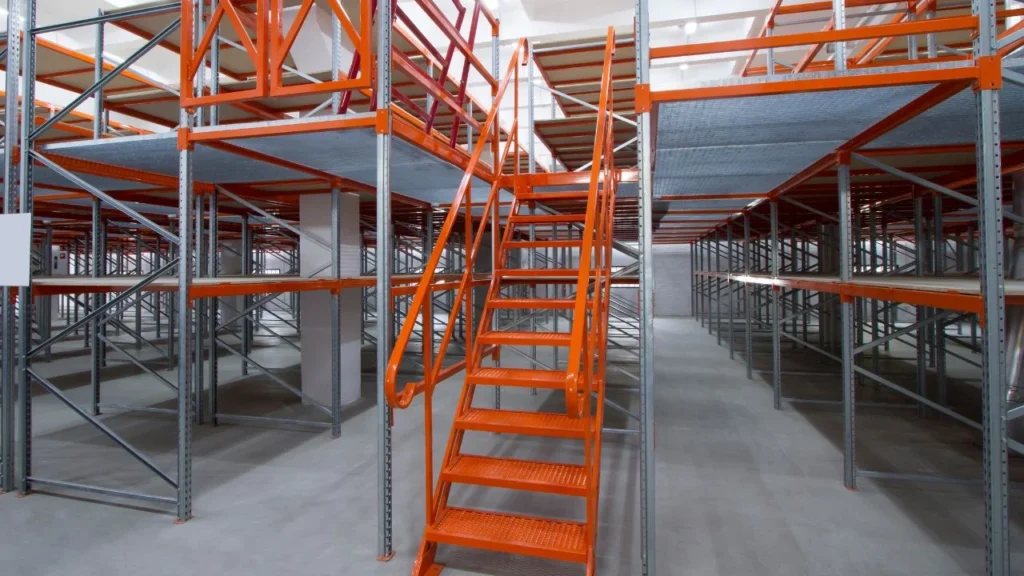
Mezzanine stairs are more than just a way to move between levels. In industrial environments, they directly affect safety, compliance, and day-to-day efficiency. When designed properly, they support smooth workflow and reduce risk. When overlooked, they quickly become a bottleneck or even a liability. They also play a key role in maximizing usable space without compromising accessibility. Choosing the right design ensures durability, ease of use, and long-term operational reliability.
Where Most Mezzanine Stair Projects Go Wrong (Before Design Even Starts)
One of the biggest issues we see is treating mezzanine access stairs as an afterthought. By the time stairs are considered, the available space is already restricted, forcing compromises that affect compliance and usability.
Another common mistake is misjudging how much space is actually needed. Facilities often allocate space based on layout convenience instead of regulatory requirements. This leads to steep stair angles or insufficient landings that fail audits later.
Usage patterns are also frequently ignored. A staircase used occasionally for inspection has very different requirements compared to one used constantly for picking or transport. Yet many designs don’t reflect this distinction.
Mezzanine Stair Types Used in Real Industrial Installations
Straight-Run Mezzanine Stairs
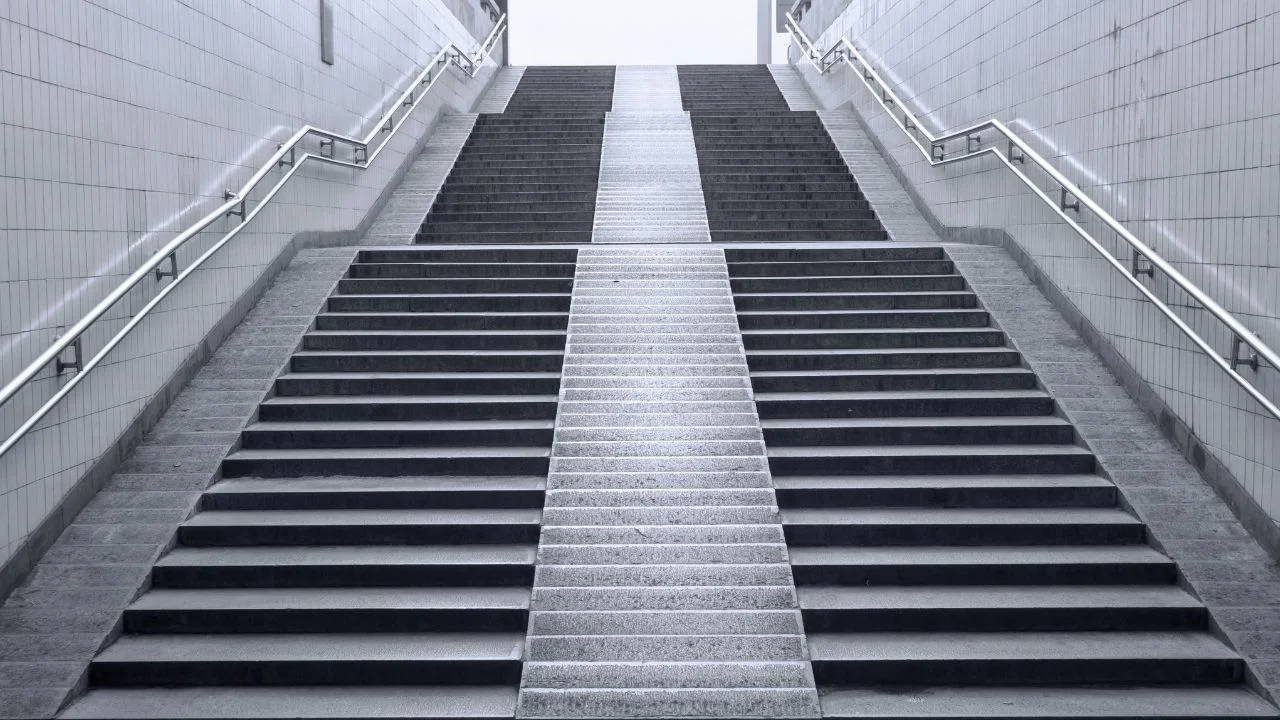
These are the most common and compliant options. Straight-run stairs provide consistent movement, making them ideal for warehouse mezzanine stairs with moderate to high traffic.
L-Shaped (Quarter-Turn) Stairs
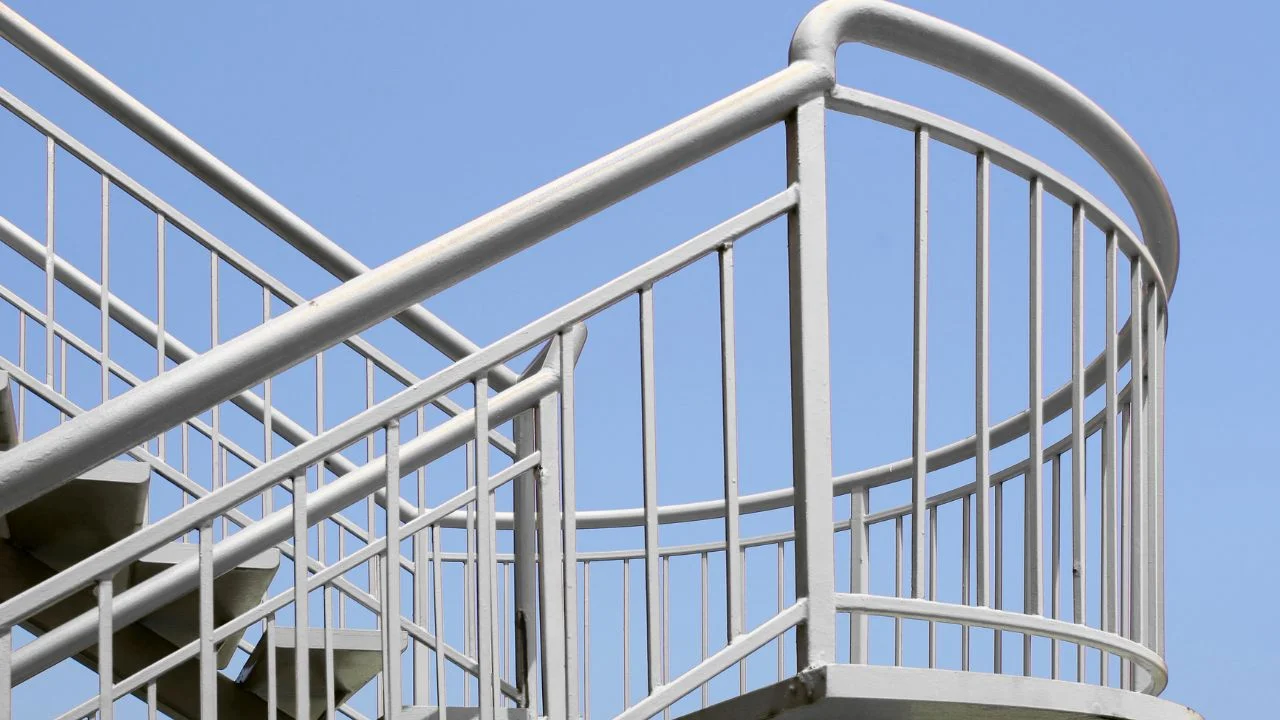
These include a landing that changes direction. They are useful when space is limited but still need to meet safety requirements.
U-Shaped (Switchback) Stairs
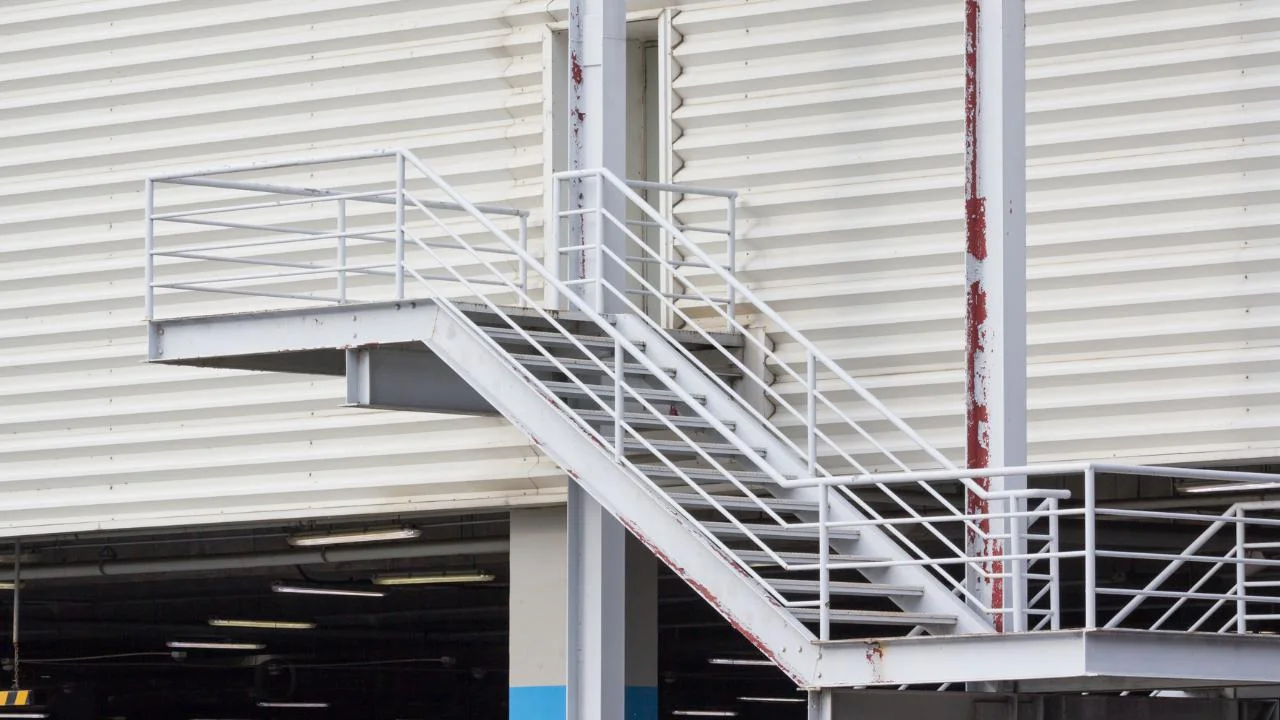
Often used in tighter layouts, these stairs double back on themselves. We frequently install these in facilities where vertical space is available but floor space is restricted.
Spiral Stairs (Limited Industrial Use)
While visually compact, spiral stairs are rarely suitable for industrial mezzanine stairs due to restricted movement and difficulty carrying loads.
Alternating Tread Stairs (Space-Saving)
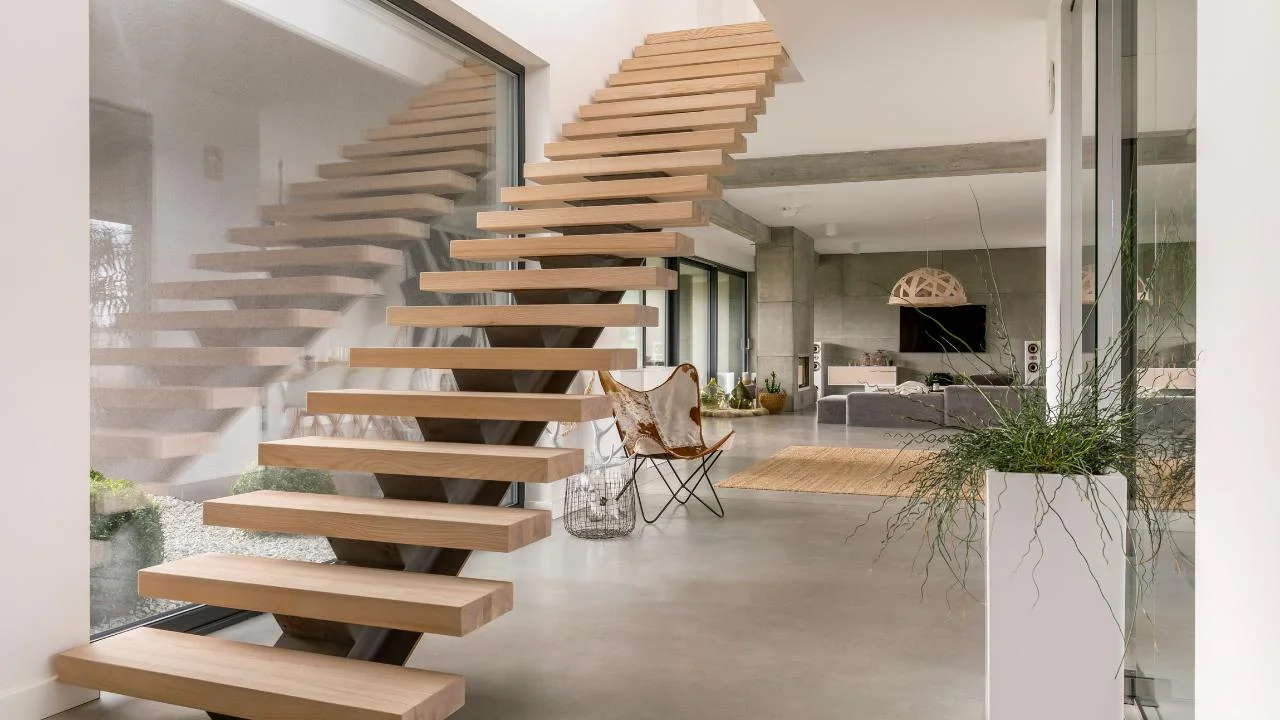
These are designed for steep angles and minimal footprint. They are sometimes used in low-traffic areas but typically face compliance limitations. For residential contexts where space is tight, space-saving stair designs follow similar principles, though industrial compliance requirements are considerably stricter.
Ship Ladders / Step-Type Ladders
These are the most space-efficient but also the least suitable for frequent use. In Australia, their use is heavily restricted depending on application and safety requirements. As noted under AS 1657:2018, ship ladders cannot be used as primary mezzanine access.
The “Traffic Reality Check”: Matching Stair Design to Actual Warehouse Movement
Designing mezzanine floor stairs without understanding real movement patterns is where many projects fail. On paper, a staircase may meet all requirements. In practice, it may struggle during peak operations.
We always assess how workers actually use the space. Are they carrying loads? Moving quickly? Using the stairs simultaneously? These factors change everything.
A scenario we encounter regularly is a warehouse installing narrow stairs that technically meet minimum standards but create congestion during busy periods. This slows operations and increases safety risks.
The key is designing for peak usage, not average usage. That’s where most theoretical designs fall short after installation.
Mezzanine Staircase Design: What Actually Works in Real Facilities
Effective mezzanine staircase design balances compliance with usability. The technical elements matter, but how they translate into daily use matters more.
- Rise and Going: The vertical (rise) and horizontal (going) dimensions must be consistent. Inconsistent steps are a major safety risk.
- Stair Pitch: Industrial stairs typically sit between 30°–38°. Anything steeper often leads to compliance issues unless classified differently.
- Load Capacity: Steel mezzanine stairs must handle both static and dynamic loads, especially in warehouses where items are carried. Under AS/NZS 1170.1,
- stairways must be structurally designed to withstand permanent, imposed, and occupancy-related load actions.
- Handrails and Landings: Dual handrails and intermediate landings are not optional, they are essential for both safety and compliance.
Compliance Isn’t Just a Checklist: How Australian Standards Affect Real Designs
In Australia, mezzanine stairs regulations are primarily guided by the National Construction Code (NCC) and standards such as Standards Australia AS 1657.
According to Safe Work Australia, access systems must minimise risk and ensure safe movement between levels. You can review official guidance here: In practice, compliance is not just about meeting measurements. During approvals, inspectors often focus on usability and risk, not just dimensions.
For example, a staircase may meet the minimum width but still be flagged if it creates congestion or unsafe movement patterns. SafeWork NSW provides detailed guidance on exactly these scenarios, including how isolated steps, inadequate lighting, and non-slip surfaces are assessed during workplace inspections. Understanding stair safety requirements is essential for anyone specifying or approving access systems in industrial environments.
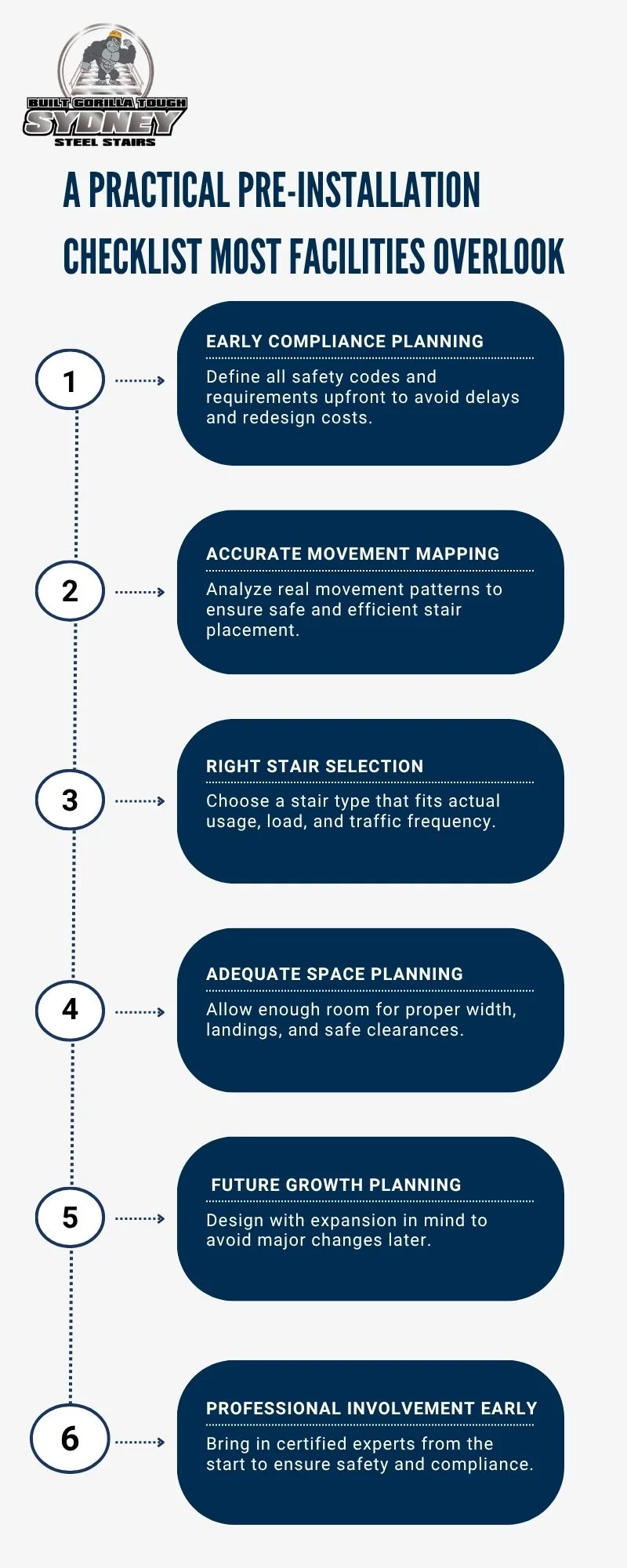
A Practical Pre-Installation Checklist Most Facilities Overlook
Choosing the Right Mezzanine Access Stairs for Your Facility
Selecting the right mezzanine access stairs depends on more than just available space.
You need to match the stair type to:
- Usage frequency: High traffic demands standard stairs
- Space constraints: Tight layouts may require switchback designs
- Load handling: Carrying goods requires wider, less steep stairs
- Compliance level: Some environments have stricter requirements
For example, warehouse mezzanine stairs used daily should prioritise safety and flow, while folding mezzanine stairs or ladders may suit occasional access zones. The steel stair fabrication also plays a significant role in whether the final installation meets dimensional tolerances required under AS 1657. We always connect this decision back to real usage. The wrong choice doesn’t just affect compliance, it impacts productivity every day.
Conclusion
Mezzanine stairs play a critical role in industrial safety and efficiency. Getting them right requires more than choosing a design. It means understanding real usage, meeting compliance requirements, and planning for long-term operation. Regular inspection and proper maintenance are just as important to keep them safe and fully functional over time. Investing in a well-planned solution upfront helps prevent costly issues and ensures smooth operations in the long run.
For reliable, durable, and compliant mezzanine stair solutions, contact Sydney Steel Stairs. Our team can help you choose and design the right system for your project needs.
FAQs
What is the standard angle for mezzanine stairs in Australia?
The typical angle ranges between 30 and 38 degrees under AS 1657 guidelines, depending on use. Steeper angles may be allowed for restricted access but not for regular industrial movement.
Are mezzanine stairs required to meet AS 1657 standards?
Yes, most industrial mezzanine stairs must comply with AS 1657 or NCC requirements. These standards ensure safe access, proper dimensions, and risk reduction in workplace environments.
Which stair type is best for high-traffic warehouse use?
Straight-run or U-shaped stairs are generally best for high-traffic use. They provide consistent movement, better load handling, and improved safety compared to compact or steep alternatives.
Can space-saving stairs be used for daily operations?
Space-saving stairs like alternating tread designs are usually not suitable for daily use. They are better for occasional access due to safety limitations and stricter compliance conditions.
How long does installation typically take in Australia?
Most mezzanine stair installations take two to six weeks, depending on design complexity, approvals, and site readiness. Delays often occur during compliance checks rather than fabrication.
What affects the cost of mezzanine stairs the most?
The biggest cost drivers include design complexity, compliance requirements, material selection, and site constraints. Projects needing redesign or adjustments typically experience higher overall costs.