Slip-related incidents on stairs remain one of the most common workplace hazards across Australia. Even when staircases meet basic construction standards, real-world conditions like water, dust, or heavy foot traffic can quickly reduce traction. That’s where anti slip stair treads make a measurable difference.
Rather than treating safety as a one-time compliance task, many facility managers now view stair performance as an ongoing risk control measure. The right tread solution doesn’t just add grip. It improves visibility, durability, and long-term reliability in environments where slips can lead to serious injury, downtime, and liability.
Why Code-Compliant Stairs Still Pose Slip Risks
Building codes and standards provide a baseline for stair design, but they are not always designed for high-risk, real-world environments. A staircase may pass inspection on day one yet become hazardous within months due to wear, contamination, or environmental exposure.
For example, outdoor stairs exposed to rain or industrial stairs exposed to oil behave very differently from the controlled conditions used in slip testing. According to Safe Work Australia, slips, trips, and falls account for a significant portion of workplace injuries each year, particularly in environments with variable surface conditions.
Another issue is friction loss over time. Dust accumulation, grease, and even smooth shoe soles can reduce traction significantly. This is why relying solely on base materials without additional grip solutions often falls short in maintaining consistent stair safety.
Surface Grip Is Not One-Size-Fits-All
Not all stair environments demand the same level of slip resistance. Choosing the wrong type of tread can lead to either insufficient grip or unnecessary wear.
- Wet outdoor areas: Require aggressive grip profiles like serrated metal stair treads to maintain traction during rain.
- Industrial zones: Often deal with oil, chemicals, or debris, making steel stair treads with open profiles more effective for drainage and grip.
- Commercial interiors: Focus on moderate slip resistance with a balance between safety and comfort for frequent pedestrian use.
Material choice plays a major role here. Steel offers strength and durability, while galvanised finishes help resist corrosion in exposed environments. In contrast, softer materials may wear down quickly under heavy use, reducing effectiveness over time.
Selecting the right tread is less about preference and more about matching performance to environmental conditions.
Understanding Slip Resistance Ratings
Slip resistance ratings in Australia are commonly expressed as P ratings (pendulum test) or R ratings (ramp test). While both measure slip resistance, they apply to different conditions and testing methods.
- P ratings (P1–P5): Used in Australian standards for pedestrian surfaces. P4 and P5 are typically recommended for high-risk environments.
- R ratings (R9–R13): Often used for industrial settings, particularly where contaminants like oil are present.
According to Standards Australia and guidance from HB 198:2014, selecting the correct rating depends on the specific environment, not just aiming for the highest number.
Higher ratings can sometimes create overly abrasive surfaces, which may not be suitable for all users. The key is aligning the rating with actual exposure conditions rather than defaulting to maximum resistance.
Steel, Aluminium, or Galvanised: Which Material Works Best?
Material choice directly affects how long your stair treads last and how well they perform under real conditions. Understanding the differences between concrete and steel stairs can also help when evaluating which base structure best supports your chosen tread system.
| Material Type | Best Use Case | Key Benefits | Limitations |
| Steel Stair Treads | Heavy industrial environments | High strength and long lifespan; handles heavy loads and constant foot traffic; maintains consistent grip over time | Can corrode if not treated or maintained properly |
| Galvanised Steel Stair Treads | Outdoor or wet environments | Corrosion-resistant coating; excellent durability in harsh weather; extended lifespan | Slightly higher upfront cost compared to standard steel |
| Aluminium Stair Treads | Moderate-use commercial areas | Lightweight; easy to install; naturally corrosion-resistant | Less durable under heavy industrial loads; may wear faster |
| Rubber Stair Treads | Indoor environments with moderate traffic | Comfortable underfoot; good slip resistance in dry conditions | Not suitable for high temperatures, heavy loads, or oily environments |
For most industrial applications, steel staircases with steel or galvanised steel treads provide the best balance of durability, grip, and long-term value, especially in demanding conditions.
Stair Design Problems That Make Slips More Likely
Even with high-quality treads, certain design issues can increase the risk of slips:
- Poor drainage: Water pooling reduces friction instantly
- Inconsistent step dimensions: Interrupt natural walking rhythm
- Low edge visibility: Makes it harder to judge step depth
- Surface contamination zones: Entry points where dirt or oil accumulates
Addressing these issues alongside installing treads leads to significantly better safety outcomes.
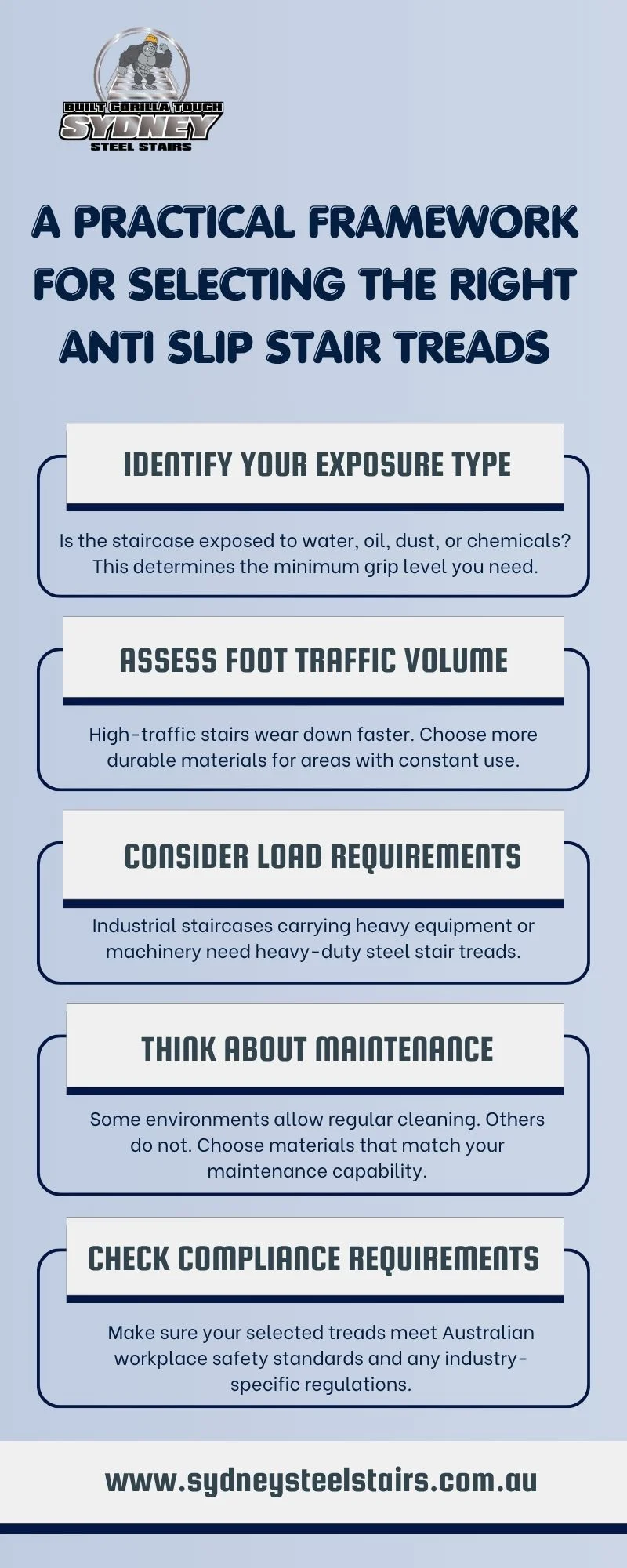
A Practical Framework for Selecting the Right Anti Slip Stair Treads
Why Some Anti Slip Stair Treads Fail Early
Not every anti slip product delivers long-term performance. Common reasons treads fail sooner than expected:
- Adhesive products lose their bond strength when exposed to moisture or temperature changes
- Surface coatings wear off quickly under heavy foot traffic
- Wrong installation on incompatible substrates causes early detachment
- Low-quality materials degrade rapidly in harsh or chemical-heavy environments
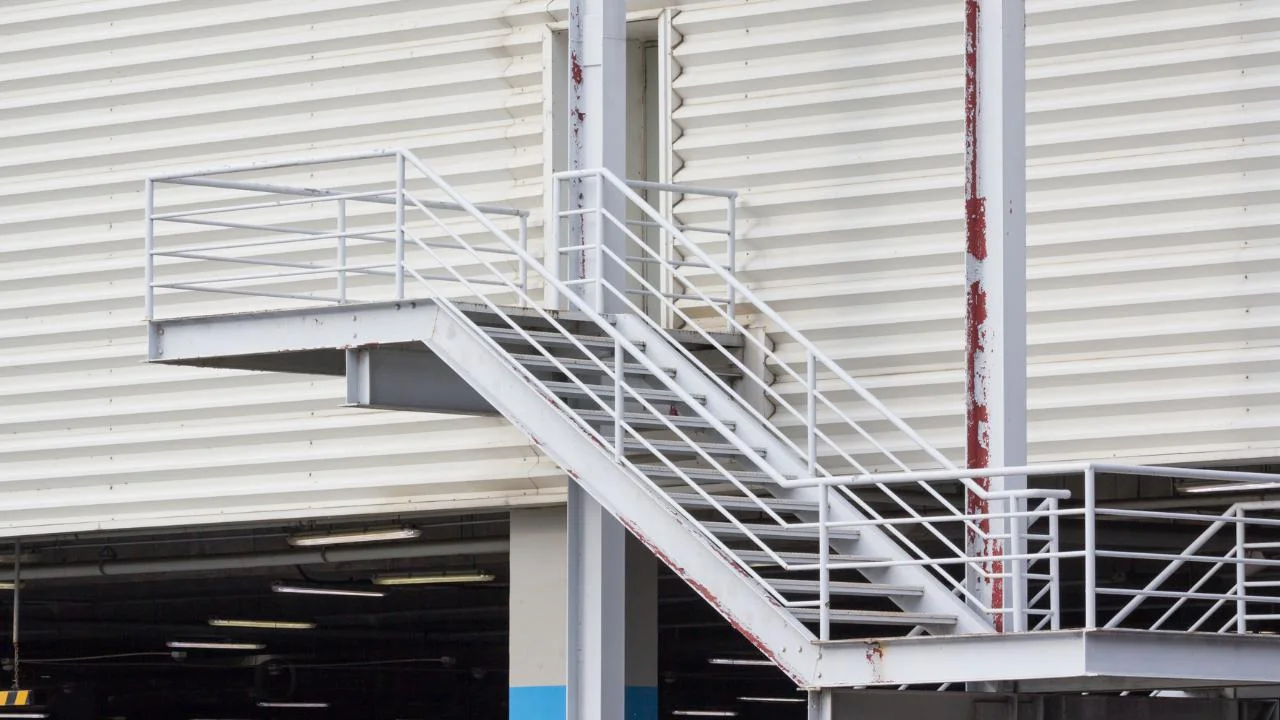
Fixed metal stair treads are generally the most reliable long-term solution for industrial and commercial environments where performance consistency matters. The same principle applies to fire escape stairs, where tread integrity under emergency conditions is non-negotiable.
The Cost of Ignoring Stair Safety
Some businesses delay investing in proper stair safety because of upfront costs. But the real cost of doing nothing is much higher.
According to Safe Work Australia, workplace injuries cost Australian businesses billions of dollars each year in lost productivity and compensation claims. A single serious slip incident can lead to:
- Significant downtime while the area is closed for investigation
- Legal liability and compensation claims
- Higher insurance premiums following an incident
- Reputational damage in serious cases
When you compare the cost of installing quality anti slip stair treads against the potential financial and human cost of an injury, the investment is straightforward.
How to Keep Your Stair Treads Performing Long-Term
Installing the right treads is just the first step. Ongoing maintenance is what keeps them effective.
- Regular cleaning: Remove dirt, oil, and debris that accumulates on tread surfaces. Even high-quality treads lose grip when heavily contaminated.
- Scheduled inspections: Check for signs of wear, loose fixings, or surface damage. Address issues early before they become hazards.
- Monitor high-traffic zones: Areas with the most foot traffic wear faster. These may need more frequent inspection or earlier replacement.
- Replace worn treads promptly: A worn tread is worse than no tread in some cases because it gives a false sense of security.
Australian Workplace Compliance: What You Need to Know
Staying compliant does not have to be complicated. Here are the key requirements for Australian workplaces:
- Stairs must have adequate slip resistance for the environment
- Step edges must be clearly visible
- Stair construction must be structurally sound
- Regular inspection and maintenance must be documented
- High-risk areas may require specific P or R ratings
Safe Work Australia and Standards Australia both support a risk-based approach, identify the hazards first, then control them with appropriate solutions. Reactive responses after incidents are far more costly than proactive prevention.
For businesses operating under specific industry regulations, the Work Health and Safety Act 2011 also sets out the legal duty of care that employers hold regarding workplace hazards, including slipping risks on stairs.
Conclusion
Workplace safety is not just about meeting minimum standards. It’s about ensuring consistent performance under real conditions. Anti slip stair treads provide a practical way to reduce risk, improve durability, and maintain compliance across a wide range of environments.
By focusing on the right materials, correct slip resistance ratings, and ongoing maintenance, stair safety becomes a long-term advantage rather than a recurring issue.
Ready to improve stair safety on your site? Contact Sydney Steel Stairs to discuss the right tread solution for your environment.
FAQs
What are anti slip stair treads designed to improve?
They enhance surface grip on stairs, reducing slip risks caused by moisture, contaminants, and heavy foot traffic in commercial and industrial environments.
Do steel stair treads perform better in harsh environments?
Yes, steel stair treads provide strong durability and consistent traction, especially in environments exposed to weather, chemicals, or heavy operational use.
Is the highest slip resistance rating always the best choice?
Not always. Extremely high ratings may be too abrasive for some environments, so selecting the right rating depends on usage conditions and safety requirements.
Can anti slip stair treads be added to existing staircases?
Yes. Many tread systems are designed for retrofit installation, so you can improve safety without replacing the entire staircase.
What causes anti-slip stair treads to lose effectiveness over time?
Accumulated dirt, oil, surface wear, and environmental exposure all reduce grip. Regular cleaning and periodic replacement keep performance consistent.
Are anti slip stair treads necessary for workplace compliance in Australia?
In risk-prone environments, they are generally required to meet workplace health and safety obligations. Failure to control known slip hazards can expose businesses to significant legal liability.