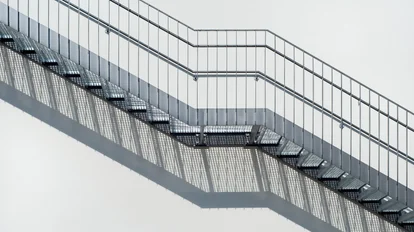

Space is getting tighter in Australian homes. Whether it’s a compact inner-city build, a granny flat, or a tiny home, every square metre matters. That’s where space saving stairs come in. They’re not just smaller versions of traditional stairs. When designed properly, they can unlock usable floor space without sacrificing safety or functionality.
In this guide, you’ll learn how different space saving staircases work, what actually makes them efficient, how much they cost in Australia, and the real-world design decisions that matter when space is limited.
Why Space Constraints Are Changing Staircase Design in Australia
Australian housing trends are shifting toward smaller footprints, especially in urban areas. According to the Australian Bureau of Statistics, higher-density living has steadily increased over the past decade as land prices rise and infill development expands.
That shift changes how we think about vertical access. Traditional staircases often consume 6–10 square metres of floor area. In smaller homes, that’s space you simply can’t afford to lose.
A scenario we encounter regularly is homeowners trying to retrofit stairs into an existing layout. In many of these cases, a standard staircase just doesn’t fit without major structural changes. That’s where compact staircases become essential rather than optional.
What Actually Makes a Staircase “Space Saving”?
A staircase isn’t considered space-saving just because it looks compact. The efficiency comes from how its geometry is designed.
Key factors include:
- Rise and going (step height and depth)
- Pitch (angle) of the staircase
- Total footprint relative to floor area
- Circulation flow around the stairs
The stricter these dimensions, the smaller the footprint. But there’s a trade-off. As stairs become steeper or narrower, they can become less comfortable or harder to use daily. The Australian Building Codes Board regulates these dimensions through the National Construction Code (NCC), which sets minimum requirements for safety, usability, and accessibility. Understanding stair regulations in Australia before committing to a design saves significant time and cost down the line.
Types of Space Saving Staircases
Different layouts call for different solutions. Here’s how the most common options perform in real homes.
Spiral Staircase for Small Space
Spiral stairs are one of the most compact options available. They fit into tight corners and require minimal floor space.
Best for:
- Secondary access (lofts, mezzanines)
- Small footprints where straight stairs won’t fit
Limitations:
- Difficult to move furniture
- Not ideal for high-traffic daily use
Floating Stairs for Small Spaces
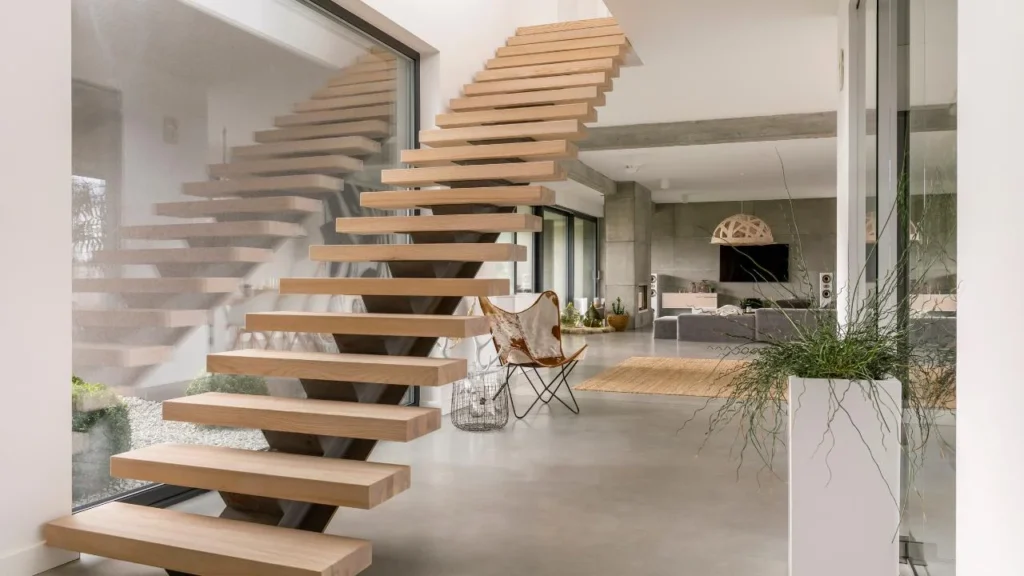
Floating stairs don’t always reduce footprint, but they create a visual sense of space. That can make small interiors feel significantly larger. In our experience, homeowners often choose floating stairs when the goal is openness rather than maximum space reduction.
Structural note: These typically rely on steel stringers anchored into walls for support The specific stair components used in this configuration, stringers, treads, and fixing brackets directly affect how slim the overall profile can be.
Alternating Tread (Paddle Stairs)
These are one of the most aggressive stairs for small spaces. Each step is offset, allowing for a much steeper climb.
Best for:
- Loft access
- Very tight vertical spaces
Important: These are usually not permitted as primary access stairs under NCC rules.
Narrow Staircase Design
Reducing the width of the staircase can free up valuable floor area. In many renovation projects, reducing stair width by even 150–200 mm can significantly improve room usability without compromising function.
However, minimum widths are regulated, especially for primary access stairs.
Compact Staircases with Storage Integration
These combine vertical access with built-in storage.
Examples:
- Drawer steps
- Under-stair shelving
- Integrated cabinetry
They’re especially popular in tiny homes and multi-functional spaces.
Space Saving Stairs vs Standard Stairs
When choosing between space saving stairs and standard stairs, it’s important to consider both daily functionality and long-term home design.
| Feature | Space Saving Stairs | Standard Stairs |
| Footprint | 3–6 m² (varies by type) | 6–10 m² |
| Comfort | Moderate (context-dependent) | High |
| Compliance flexibility | Limited — NCC secondary access rules apply to some types | Standard NCC residential compliance |
| Cost (supply & install) | AUD $4,000–$15,000+ (steel, custom) | AUD $3,000–$10,000 (standard timber/steel) |
| Usability | Context-dependent | Universal |
| Best suited for | Compact homes, lofts, granny flats, tiny homes | Full-size residential builds |
Space saving stairs are ideal for maximizing floor space in smaller homes without compromising essential functionality.
Standard stairs offer greater comfort and flexibility, making them suitable for traditional full-size residential builds.
Design Rules Most Homeowners Miss
When we assess small-space stair projects, the first thing we look for isn’t the staircase itself. It’s everything around it. The most common issue we see is insufficient head height clearance, especially in retrofit projects.
Other critical checks include:
- Entry and exit positioning
- Natural walking paths (traffic flow)
- Lighting conditions
- Ceiling obstructions
A staircase can technically fit in a space but still feel awkward or unsafe if these factors aren’t considered. These principles apply across all staircase design approaches, regardless of whether the project is new construction or a renovation.
Compliance: What You Can and Can’t Do in Australia
The NCC sets strict rules for stair construction in Australia.
Key considerations:
- Minimum tread depth
- Maximum riser height
- Required handrails
- Minimum clear width
Some designs, like spiral staircase for small space or alternating tread stairs, may only be allowed for secondary access. Stair safety requirements around handrails, balustrades, and tread surfaces apply equally to compact designs and should be confirmed with your certifier early.
Material Matters: Why Steel Is Often the Best Choice for Compact Staircases
Material selection plays a major role in how compact a staircase can be. Steel stands out because of its strength-to-size ratio. We consistently find that steel allows significantly slimmer structural profiles compared to timber, especially in floating and narrow staircase designs.
Benefits of steel:
- Thinner structural components
- Higher load capacity
- Long-term durability
- Compatibility with modern designs
According to the World Steel Association (2023), steel is also highly recyclable, making it a sustainable choice for long-term construction. The full steel stair fabrication process from material selection through to finishing, also affects the final footprint and structural performance of compact designs.
Cost Breakdown: What You Can Expect in Australia (2026)
Costs vary depending on complexity, materials, and installation conditions.
Typical factors influencing cost:
- Custom vs prefabricated design
- Structural engineering requirements
- Installation access
- Material choice
Based on current market conditions and industry benchmarks, steel space saving stairs in Australia typically range from AUD $4,000 to $15,000+ for supply and installation. Prefabricated spiral staircases can start from approximately $2,500–$4,500 for basic configurations, while fully custom fabricated steel floating or alternating tread designs sit at the higher end. Structural engineering certification, where required, typically adds AUD $800–$2,500 to overall project costs.
Space Saving Stairs: From Idea to Installation Timeline
A Practical Selection Framework
If you’re deciding between different small staircase ideas, this process helps narrow it down:
- Measure your available footprint carefully
- Define how often the stairs will be used
- Check NCC compliance constraints early
- Choose a material that supports your design goals
- Balance aesthetics with daily usability
Skipping any of these steps usually leads to redesigns later.
Common Mistakes That Lead to Expensive Rework
- Choosing a design before checking compliance
- Ignoring head clearance limitations
- Prioritising looks over usability
- Underestimating installation constraints
A common situation we encounter is clients selecting a staircase style online, only to find it cannot be installed without structural changes.
Conclusion
The best space saving stairs aren’t the smallest. They’re the ones that balance space efficiency with safety, usability, and compliance. In compact homes, every design decision matters. The right staircase can open up your layout, improve flow, and make a small space feel functional rather than restrictive. If you’re planning a project, focus on constraints first. The ideal solution will follow from there.
Ready to explore the right option for your home? Contact Sydney Steel Stairs for a site assessment and obligation-free consultation.
FAQs
How much floor space does a spiral staircase save?
A spiral staircase typically occupies 1.5–4 m², compared to 6–10 m² for a straight staircase, a saving of up to 60% of floor area depending on diameter and configuration.
Are alternating tread stairs legal in Australia?
Alternating tread (paddle) stairs are generally not permitted as primary access under the NCC. They may be used for secondary access such as loft ladders, subject to council and certifier approval.
What is the minimum stair width under NCC?
Under NCC Volume Two (Class 1 buildings), the minimum clear width for a private staircase is 600 mm, though 1,000 mm is typical for comfortable residential use. Always verify with your local certifier.
How much do space saving stairs cost in Australia?
Steel compact staircases in Australia typically range from AUD $4,000 to $15,000+ for supply and installation, depending on design complexity, access conditions, and engineering requirements.
Can I add storage under compact stairs?
Yes. Integrated under-stair storage, including drawer steps, shelving, and cabinetry, is one of the most popular approaches in tiny homes and compact renovations, maximising every available square metre.