

Getting stair regulations wrong on a commercial or industrial project is not just a paperwork headache. It can lead to costly rework, failed inspections, or worse, a serious safety incident on site. Here is everything you need to know to stay compliant from design through to sign off.
What Are Stair Regulations in Australia?
Stair regulations in Australia are legally enforceable rules that govern how stairs must be designed, built, and maintained across different building types. They exist to ensure stairs are safe, accessible, and structurally sound, whether you are fitting out a warehouse mezzanine in Western Sydney or installing a fire escape staircase on a multistorey commercial building in Brisbane.
These regulations are not suggestions. They set minimum standards for everything from tread dimensions and handrail heights to slip resistance and load capacity. If you fail to meet them, your project will not get sign-off. If you meet them properly, you create a structure that protects both users and the business behind it.
For anyone working in construction or facilities management, understanding the stair building code in Australia is essential.
The Key Standards and Codes That Govern Australian Stairs
Think of Australian stair compliance as a layered system. Different codes apply depending on your building type, use case, and location.
National Construction Code (NCC) / Building Code of Australia (BCA)
The NCC is the foundation. It sets performance requirements and deemed to satisfy provisions for stairs across all building classes including residential, commercial, and industrial. Volume One covers Class 2 to Class 9 buildings, which includes most commercial and industrial applications.
AS 1657 Fixed Platforms, Walkways, Stairways and Ladders
This Australian Standard is the primary reference for industrial environments. It covers access stairs, walkways, and platforms where the NCC does not fully address operational requirements.
AS 1428 Design for Access and Mobility
AS 1428 governs accessibility requirements and applies in public buildings, retail spaces, and offices.
State Level Variations
The NCC provides a national baseline, but states can apply amendments. Always confirm the adopted NCC version and check for local amendments before finalising your design.
NCC Stair Requirements: What Builders and Designers Must Know
Rise and Going Dimensions
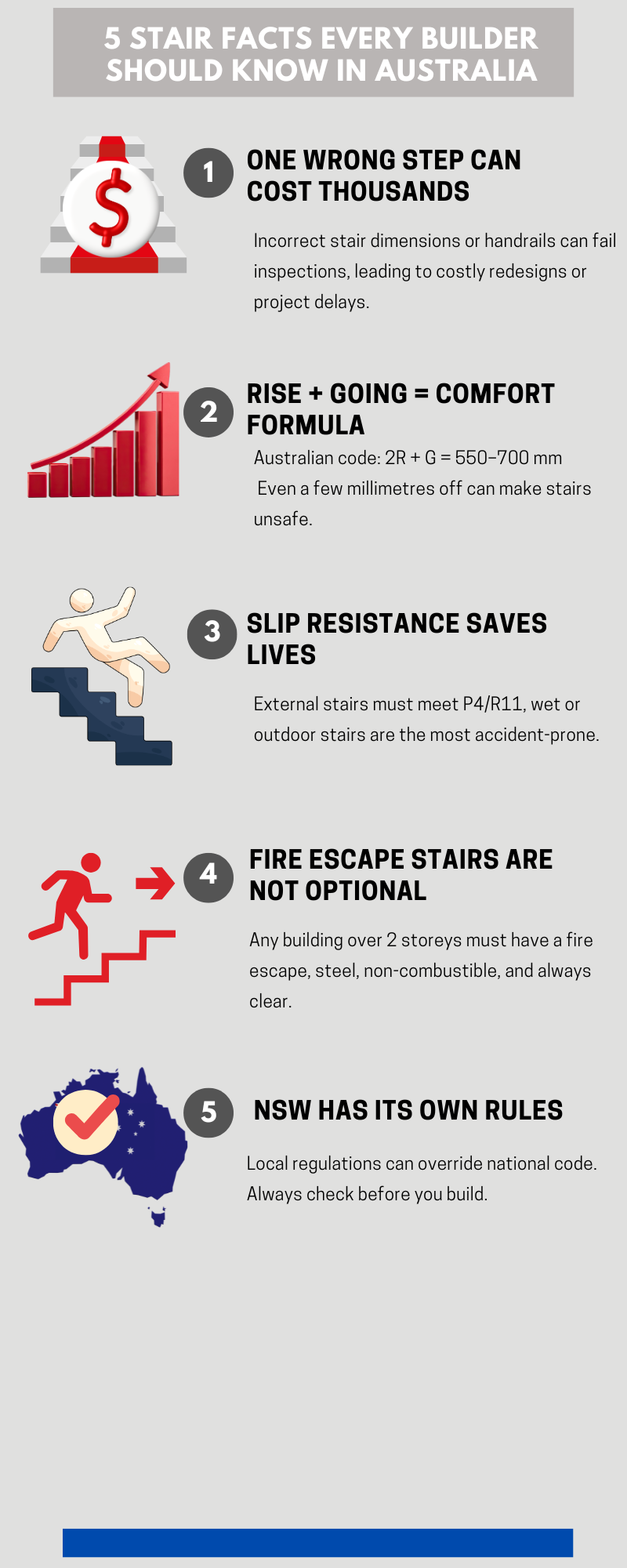
The rise is the vertical height of each step, and the going is the horizontal depth. For commercial stairs, the NCC specifies a rise between 115 mm and 190 mm, and a going between 250 mm and 355 mm. There is also a comfort formula: 2R + G must fall between 550 mm and 700 mm.
Headroom Clearance
Minimum headroom is 2000 mm measured vertically from the nosing line.
Stair Width Requirements
Most commercial applications require a minimum clear width of 1000 mm.
Landings and Rest Platforms
Landings must have a minimum depth equal to the stair width and be level and slip resistant.
Handrail and Balustrade Specifications
Handrails must be positioned between 865 mm and 1000 mm above the nosing line and be continuous.
Commercial Stair Regulations in Australia
Commercial stair regulations are primarily driven by NCC Volume One provisions.
Building Classification and Applicable Standards
Different building classes such as offices, retail, and assembly buildings have different requirements.
Slip Resistance
External commercial stairs must achieve a P4 or R11 rating under AS 4586.
Egress Stairs
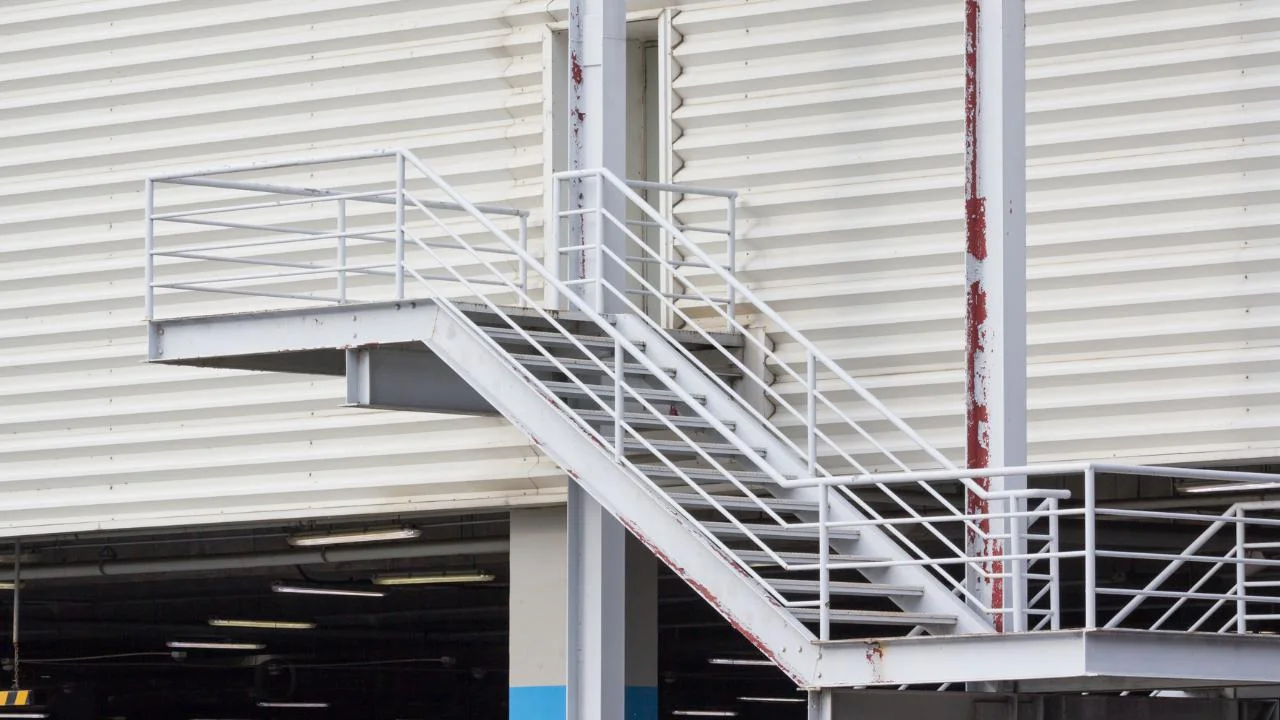
For multistorey buildings, egress stairs must be enclosed in a fire rated shaft and sized for evacuation loads. For detailed requirements, refer to fire escape stair compliance requirements.
Industrial Stair Regulations in Australia
AS 1657 Compliance for Industrial Access Stairs
Industrial stairs should have a pitch between 20° and 45°.
Structural Load Requirements for Steel Stairs
Industrial stairs must handle specific live loads depending on use. A deeper comparison is covered in steel vs concrete stair compliance.
Safety Features
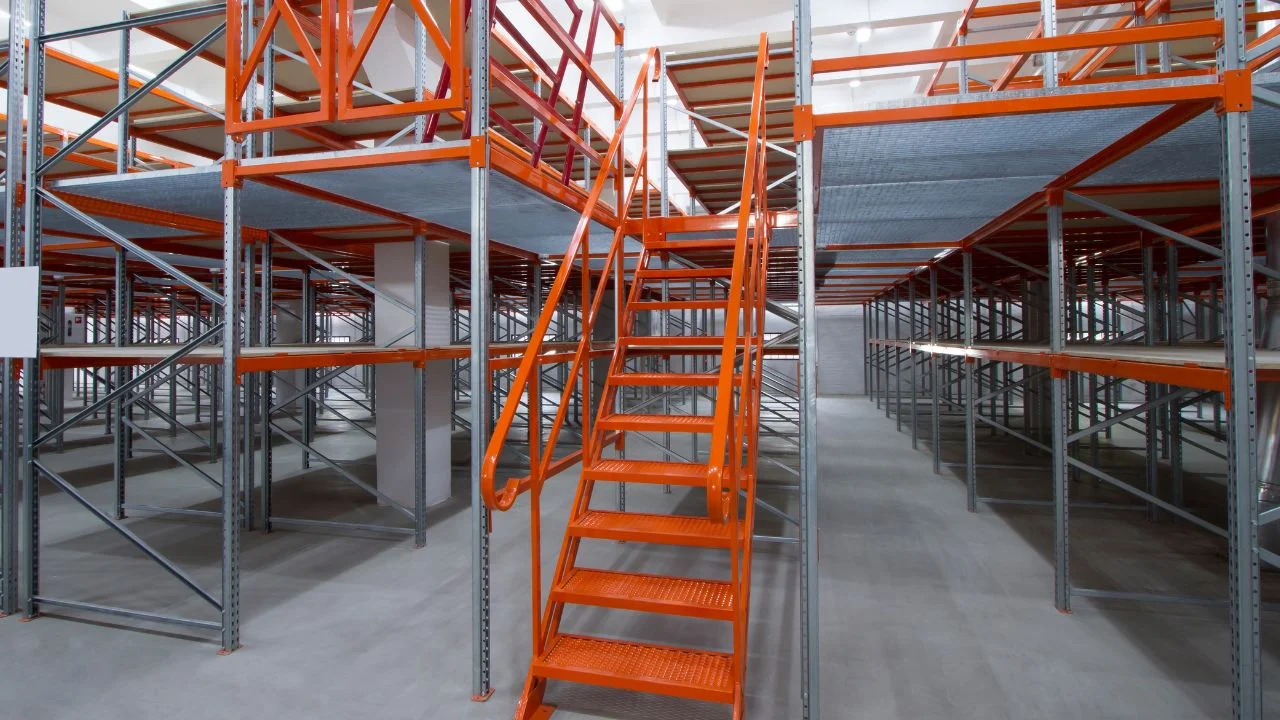
Industrial stairs require toe boards, non slip nosings, and compliant open riser designs.
Fire Escape Stair Requirements in Australia
When a Dedicated Fire Escape Stair Is Required
Buildings taller than two storeys typically require dedicated fire escape stairs.
Construction and Material Standards
Fire stairs must be non combustible, with steel being the most common choice.
Clearance, Signage, and Ongoing Compliance
Stairs must remain unobstructed and comply with signage standards.
5 Stair Facts Every Builder Should Know in Australia
Staircase Regulations in NSW: State Specific Considerations
How NSW Legislation Interacts with the NCC
The Environmental Planning and Assessment Act governs enforcement.
Development Approval Pathways
Projects typically require approval through DA or CDC pathways.
Certifier Sign Off
A registered certifier must approve stair related construction work.
Steel Stairs and Stair Regulations: What to Know Before You Fabricate
Why Steel Works for Compliance
Steel stairs are precise, non combustible, and strong. For design considerations, see steel staircase design tips.
Design Tolerances
Small inconsistencies in dimensions can cause non compliance.
Working with the Right Fabricator
Fabricators must understand NCC and AS 1657 requirements. You can also explore modern staircase design ideas for broader context.
How to Achieve Stair Compliance in Australia
-
Review the applicable code for your building class
-
Engage a structural engineer early
-
Document specifications and approve drawings
-
Conduct a compliance check before installation
-
Obtain final sign off and maintain records
Common Stair Compliance Mistakes to Avoid
Incorrect Rise to Going Ratios
Even small inconsistencies can fail inspection.
Non Compliant Handrail Heights or Gaps
Handrails and balustrades must meet strict rules.
Inadequate Slip Resistance
Incorrect surface finishes can be costly to fix.
Skipping Engineer Certification
Custom stairs require proper engineering approval.
How to Choose the Right Stair Fabricator for Compliance Projects
Experience with NCC and AS 1657
Your fabricator must have proven experience.
In House Engineering Capability
Close collaboration improves compliance outcomes.
Custom Fabrication for Non Standard Sites
Handling complex site conditions is critical. For safety focused selection, review stair safety compliance tips.
Get Expert Help for Your Steel Stairs
If you’re planning a commercial or industrial stair project, working with experienced professionals can make compliance and installation much smoother. Sydney Steel Stairs offers custom steel stair solutions designed to meet Australian standards, with practical advice on design, fabrication, and safety. Reach out to discuss your project and get a tailored solution that fits your site and requirements.
Frequently Asked Questions
What is the minimum width for stairs in Australia under the NCC?
Most commercial stairs require a minimum width of 1000 mm.
What is the maximum rise height for commercial stairs?
The NCC allows up to 190 mm.
Do industrial stairs need to comply with AS 1657 or the NCC?
Often both, depending on the project.
Are there specific stair regulations for NSW?
Yes, through state amendments and approval pathways.
What slip resistance rating is required for external commercial stairs?
A minimum P4 or R11 rating is required.