
Whether you are putting together a commercial building, a mezzanine level in a warehouse, or a multi-storey residential project, understanding steel stair components is one of those fundamentals that separates builders who deliver quality work from those who run into costly surprises halfway through a job. Steel staircases are not just a collection of metal parts bolted together. Every component plays a structural role, and getting any one of them wrong can mean the whole assembly fails inspection or, worse, becomes a safety hazard.
This guide breaks down every key part of a structural steel stair, how they work together, and what you need to keep in mind during the design and construction phase.
Why Steel Stairs Are the Preferred Choice in Commercial Construction
Before diving into the individual parts, it is worth understanding why steel dominates commercial stair construction in Australia and globally. Steel offers a strength-to-weight ratio that concrete simply cannot match at the same dimensions. It is also far more flexible in terms of design, making it ideal for tight spaces, mezzanine steel stair design, and projects where visual aesthetics matter alongside function.
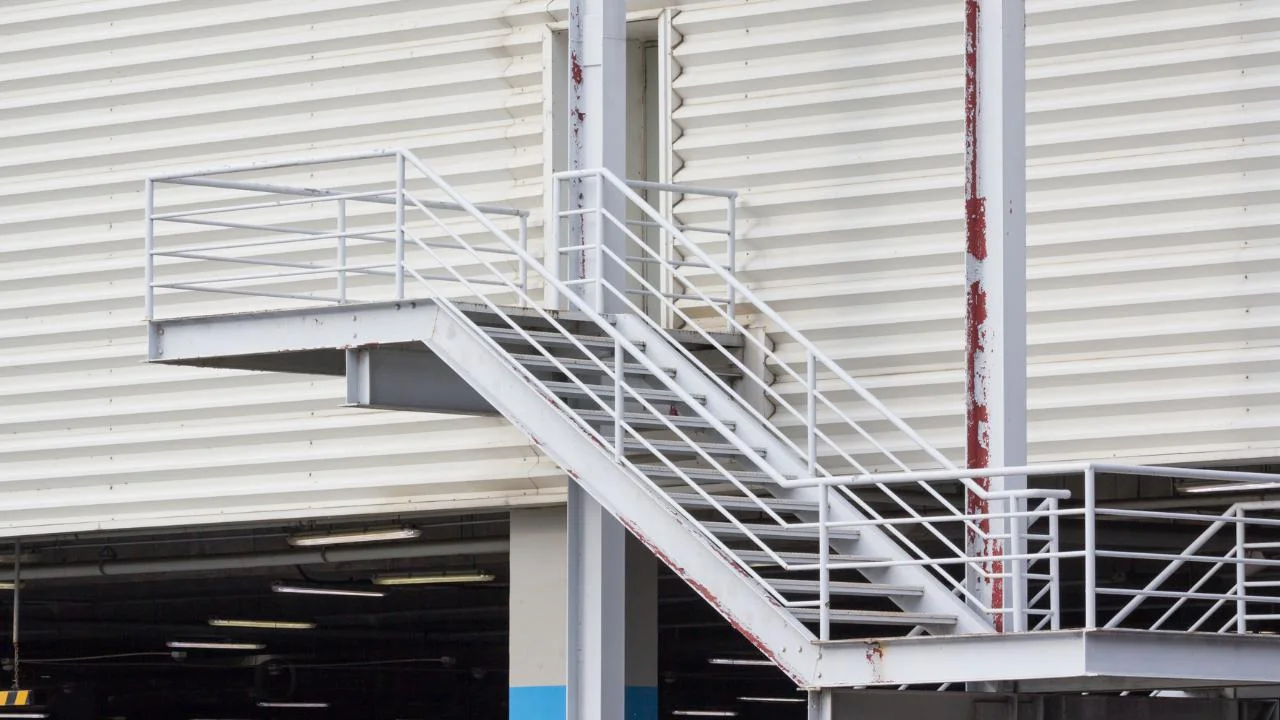
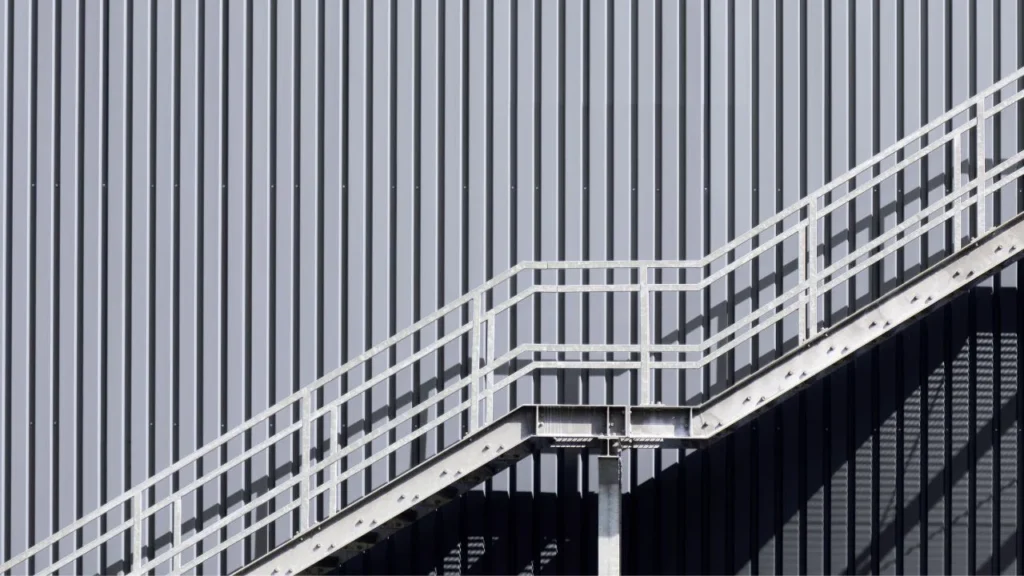
Galvanised steel stairs are especially popular in outdoor and industrial settings because the zinc coating creates a durable barrier against corrosion. For indoor commercial applications, painted or powder-coated mild steel is the standard. Either way, the core stair construction principles remain the same.
The Main Components of a Steel Staircase
1. Steel Stair Stringers
The stringer is the backbone of any steel staircase. These are the two inclined beams that run along either side of the stairs and carry the load of every tread, riser, and person using the stairs at any given moment.
In structural steel stairs, stringers are most commonly fabricated from channel sections (PFC), universal beams (UB), or a flat plate that has been cut and welded into a sawtooth profile. The choice between these depends on the load requirements, the span between floors, and the aesthetic outcome the designer is after.
Cut stringers have a notched top edge where each tread sits, giving the classic open look. Closed or box stringers encase the treads within the beam, creating a cleaner finish that works well in office and retail environments. For heavy industrial loads, builders often go with a deeper UB section to keep deflection within the acceptable range under AS 1657 or the relevant National Construction Code provision.
One thing builders often overlook is the connection at the top and bottom of the stringer. The stringer must be properly welded or bolted to the structural frame of the building, and any movement or flex at those connection points will telegraph itself across the entire stair over time.
2. Treads
The tread is the horizontal surface you step on. In steel stair construction, treads come in several forms depending on where the stairs will be used.
Grating treads, made from bar grating or expanded metal, are standard in industrial and outdoor settings. They allow water and debris to fall through, which reduces the slip risk in wet conditions. For commercial office buildings and retail spaces, steel pan treads are far more common.
Steel pan stairs use a formed steel pan that sits between or on top of the stringers, and the pan is then filled with concrete or a similar material to create a solid, finished tread surface. This approach is widely used in multi-storey commercial construction across Australia because it provides a solid underfoot feel, good acoustic performance, and a clean surface that can be tiled or carpeted. According to resources, pan stair systems are among the most cost-effective solutions for mid to high-rise commercial builds when factoring in both material and labour costs.
Checkered plate treads are another option, offering a textured non-slip surface in a solid steel format. These suit warehouses, plant rooms, and anywhere appearance is secondary to function.
3. Risers
The riser is the vertical face between each tread. In many industrial steel stairs, risers are left completely open, which is acceptable under code, provided the opening does not exceed the limits set for preventing foot or leg entrapment. Open risers reduce material cost and weight, and they are easier to clean in environments where dust and debris accumulate.
In commercial and public building staircases, closed risers are standard. These are typically fabricated from flat plate steel and welded or bolted to the back of each tread and the face of the one below. Closed risers give the stairs a more finished, solid appearance and are required in most child-safe environments.
4. Handrails and Balustrades
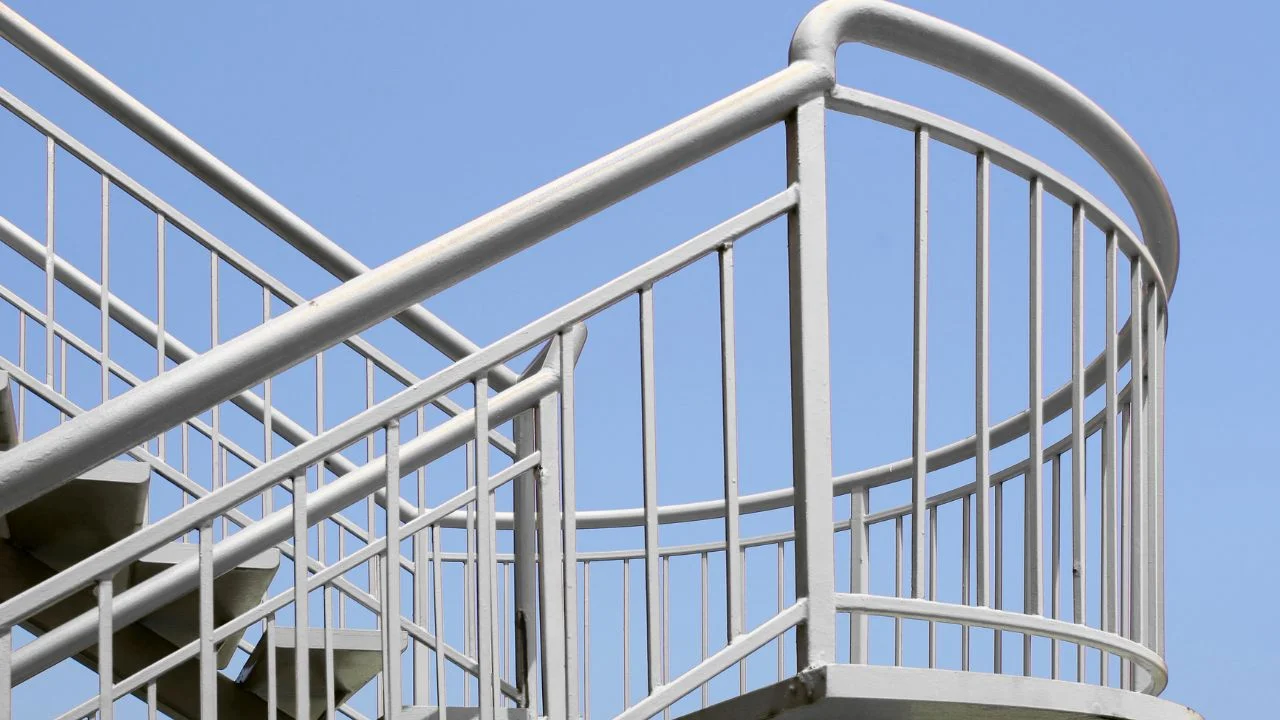
This is the component most visible to end users, and it is also one of the most regulated. Under the National Construction Code and AS 1657, handrails must be graspable, continuous, and installed at the correct height, which is typically between 865mm and 1000mm measured vertically above the nosing of each tread.
Steel handrails are most often formed from circular hollow section (CHS) or rectangular hollow section (RHS) tubes. The choice affects both the look and the grip comfort. Round tube is ergonomically preferred for handrails that people actually grasp when descending, while square and rectangular sections are more commonly used in the balustrade infill panels beneath.
Balustrade infill can be fabricated from flat bar, rod, mesh, or steel plate, depending on the design. Builders working on mezzanine steel stair design in Australia need to pay close attention to the edge protection requirements, as mezzanine fall heights can mean more stringent balustrade specifications than a standard domestic stair.
5. Newel Posts and Landing Plates
Newel posts are the vertical structural posts that anchor the handrail system, typically located at the top and bottom of a flight and at any mid landing. In steel construction, these are usually fabricated from CHS or SHS tubes and welded to the stringer or the floor plate.
The landing plate or top plate is the horizontal steel plate at the head of the stairs that connects the stringers to the floor structure above. Getting this connection right is critical for structural continuity. Any slop or gap in this connection introduces movement that can loosen welds and fasteners across the whole assembly over time.
6. Nosings
The nosing is the leading edge of each tread. It is the part that takes the most wear and is most likely to be involved in a slip-related incident. For this reason, nosings on commercial and industrial steel stairs are usually fitted with a contrasting non-slip insert, typically a rubber or abrasive inlay strip that is either welded, bolted, or adhesive-bonded to the tread edge.
In galvanised steel stairs used outdoors, the nosing treatment must also be compatible with the galvanising process if the insert is factory applied before coating.
7. Kickers and Toe Plates
At the base of balustrade panels and along open sides of stairs, kickers or toe plates prevent objects from being kicked or rolling off the edge. These are typically 100mm to 150mm high flat plates welded to the stringer or landing frame. They are mandatory in most workplace health and safety frameworks for elevated work platforms and mezzanine stairs.
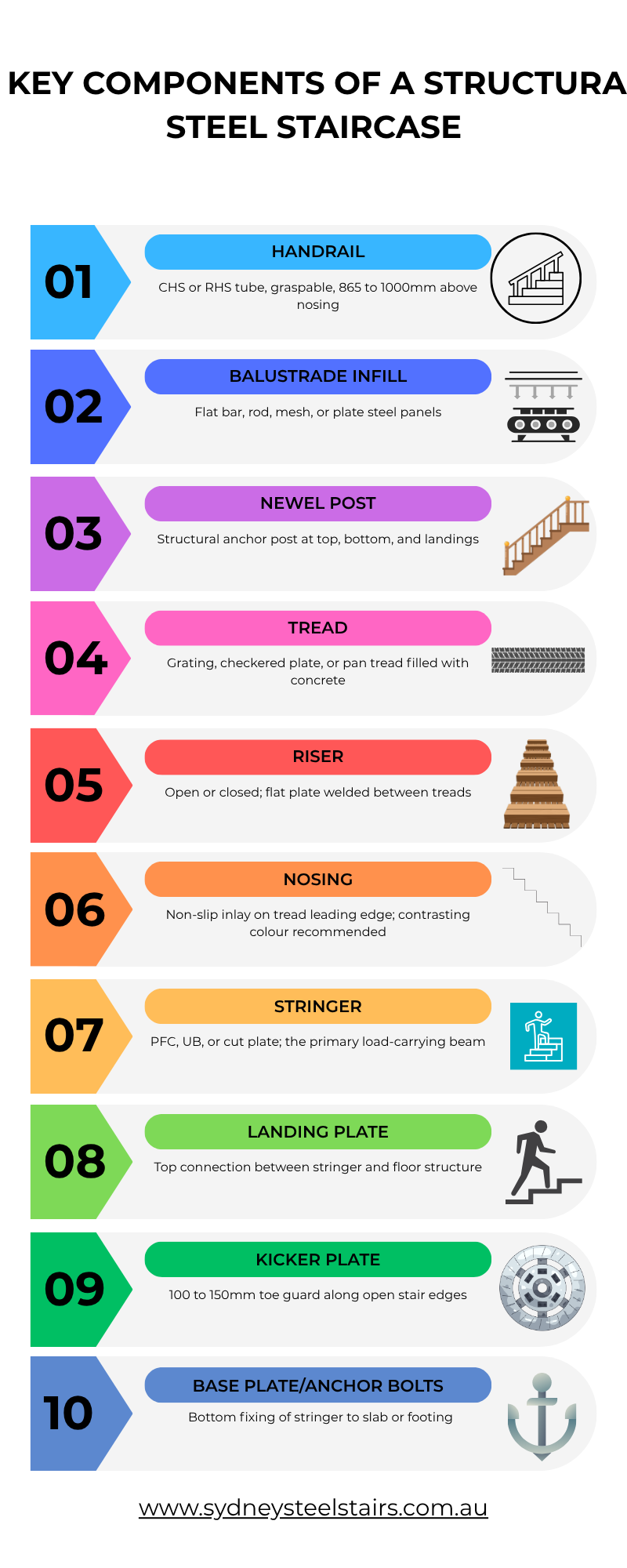
Key Components of a Structural Steel Staircase
Tolerances in fabrication matter more with steel stairs than most people expect. A stringer that is 5mm out of plumb, treads that vary in rise by more than the permitted tolerance, or a landing plate that is slightly too high will all create issues during installation and may require costly remediation.
The permitted variation in riser height across a single flight is 5mm under most Australian codes. Tread depth variation follows a similar standard. Builders working with steel fabricators should request shop drawings and check them against the architectural and structural drawings before any cutting or welding starts. Catching a dimensioning error on paper saves significant time compared to discovering it on site during installation. For a detailed technical overview of fabrication tolerances, the Australian Steel Institute publishes guidance that is directly relevant to structural stair work.
Mezzanine Steel Stair Design Considerations for Australian Builders
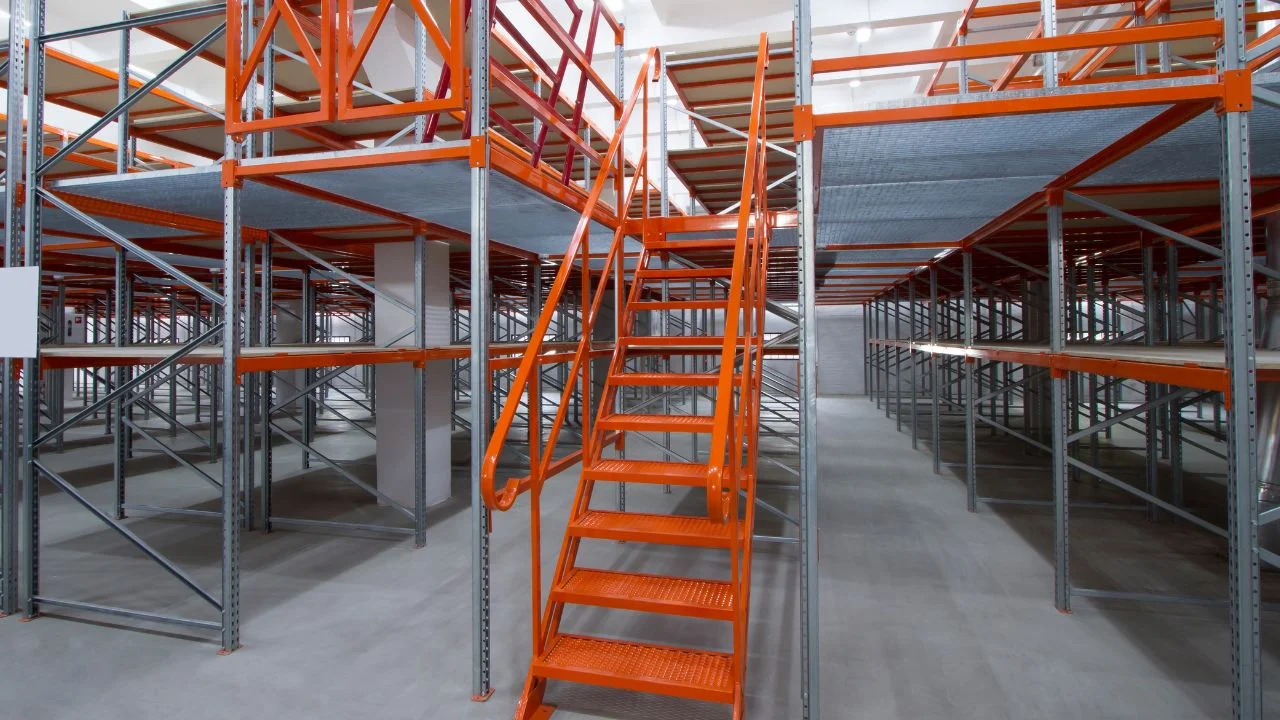
Mezzanine stairs present a specific set of challenges. The stair is often steeper than a standard commercial stair to minimise footprint, the headroom above the lower level can be tight, and the stair is usually required to handle both daily pedestrian traffic and occasional equipment access.
In Australian warehouses and commercial spaces, mezzanine stairs are typically designed to AS 1657, which covers fixed platforms, walkways, stairways, and ladders. The standard provides guidance on minimum width, riser and going dimensions, handrail requirements, and landing dimensions. For builders new to mezzanine stair design and construction, working with a fabricator who has specific experience in this area is strongly recommended.
Ready to Start Your Steel Stair Project?
If you are planning a commercial build, warehouse fitout, or mezzanine installation across Sydney or greater NSW, Sydney Steel Stairs brings the fabrication expertise and site installation experience to deliver steel staircases that meet code, look the part, and hold up for decades.
Whether you need a straightforward single flight with galvanised steel stairs for an outdoor access point or a complex multi-landing stair for a commercial mezzanine, our team can take your project from design drawings through to final inspection.
Get in touch with the team at Sydney Steel Stairs today for an obligation-free quote. We work directly with builders, project managers, and developers to make the specification and installation process as smooth as possible.
Frequently Asked Questions
What are the main components of a steel staircase?
The primary components are the stringers, treads, risers, handrails, balustrades, newel posts, nosings, landing plates, and kicker plates. Each component plays a structural or safety role and must be designed and fabricated to meet the relevant Australian standards.
What is the difference between open and closed riser steel stairs?
An open riser stair has no vertical face between treads, which reduces weight and cost and improves drainage. A closed riser stair has a steel plate filling the vertical gap between each tread, which is required in many commercial and public environments for safety and aesthetics.
What standard governs steel stair construction in Australia?
The primary standard for fixed industrial and commercial stairs is AS 1657. Building staircases in Class 2 to 9 buildings must also comply with the National Construction Code. Your fabricator and structural engineer should be across both documents for any commercial project.
How do I choose between galvanised and painted steel for my stairs?
Galvanised steel stairs are the better choice for outdoor, coastal, and high-humidity environments because the zinc coating provides long-term corrosion protection that does not chip or peel like paint. For indoor stairs, powder coating or two-pack paint systems are generally sufficient and offer more colour flexibility.